Introduction
There’s something irresistible about the combination of bright lemon and crunchy poppy seeds tucked into a soft, chewy oatmeal cookie. These Healthy Lemon Poppy Seed Oatmeal Cookies take that classic bakery flavor and rework it into a no-sugar-added treat you can feel good about reaching for. Built on a base of almond flour and oat flour, sweetened with monk fruit instead of table sugar, and brightened with fresh lemon zest and juice, this cookie delivers all the citrusy, nutty satisfaction of the original without the blood sugar spike. They come together in one bowl, bake in under 15 minutes, and yield about a dozen soft, golden cookies that taste like a little ray of sunshine — perfect for breakfast, an afternoon snack, or a light dessert.
Why It’s Good for Diabetics
The biggest culprit in a traditional lemon poppy seed cookie or muffin isn’t the lemon or the poppy seeds — it’s the cup or more of refined sugar typically used to sweeten the batter. This recipe removes that entirely, replacing it with monk fruit sweetener, a natural, zero-glycemic sugar substitute that doesn’t raise blood glucose the way sucrose does.
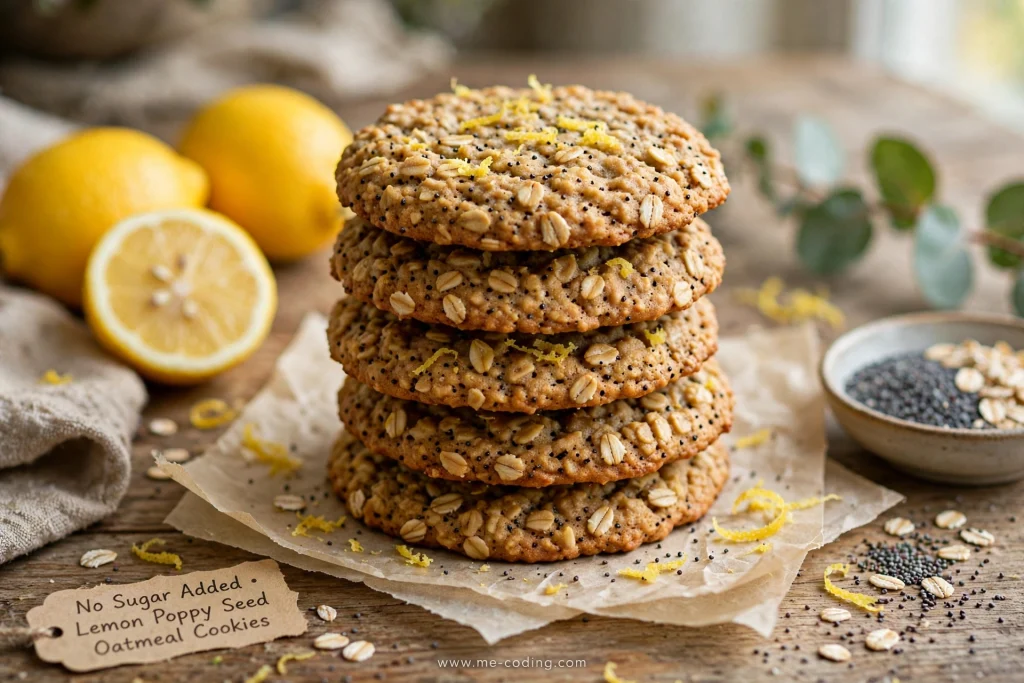
The flour blend matters just as much as the sweetener. Instead of relying on refined white flour, this recipe combines almond flour with a smaller portion of oat flour. Almond flour is low in carbohydrates and high in fiber, protein, and healthy monounsaturated fats — all of which slow the rate at which sugar enters the bloodstream after eating. Oats, even in flour form, contribute beta-glucan, a soluble fiber that has been studied specifically for its ability to blunt post-meal blood sugar spikes and support more stable glucose levels over time.
Poppy seeds themselves are essentially carbohydrate-free, contributing crunch, a nutty flavor, and a small amount of healthy fat and minerals like calcium and manganese, without meaningfully affecting blood sugar. Lemon zest and juice add bold, bright flavor with zero added sugar and virtually no carbs, meaning the citrus punch in this cookie is “free” from a blood sugar standpoint. The coconut oil used for fat is a good source of medium-chain triglycerides, which some research suggests may have a more neutral effect on blood sugar and insulin response compared to certain other fats.
Put together, this cookie relies on fiber, protein, and healthy fat to create satiety and slow digestion, rather than the fast-burning simple carbohydrates found in a conventional cookie — which is exactly the profile that’s friendlier for anyone managing diabetes or simply trying to avoid sugar crashes.
Ingredients & Substitutes
- 1 cup almond flour — finely ground blanched almond flour works best; almond meal can be substituted but will yield a slightly coarser texture.
- ½ cup oat flour — use certified gluten-free oat flour if needed; you can also make your own by blending rolled oats into a fine powder.
- 2 tbsp poppy seeds — no substitute needed, but chia seeds can work in a pinch for a similar visual speckle (flavor will differ slightly).
- 1 tsp baking powder — for lift and a soft, cakey texture.
- Pinch of salt — balances the sweetness and brightens the lemon flavor.
- 1 egg — binds the dough; a flax egg (1 tbsp ground flaxseed + 3 tbsp water, rested 5 minutes) works as an egg-free substitute.
- 2 tbsp melted coconut oil — unrefined coconut oil adds a subtle richness; melted butter is a good substitute if coconut flavor isn’t desired.
- 3 tbsp monk fruit sweetener — a granulated monk fruit blend works well; erythritol or allulose can be substituted 1:1.
- Zest of 1 lemon — use organic lemons when possible since you’re using the peel.
- 1 tbsp lemon juice — freshly squeezed gives the brightest flavor.
- ½ cup rolled oats — old-fashioned oats give the best chew; quick oats can be used but will make the texture slightly softer.
Step-by-Step Instructions
- Preheat the oven to 325°F (165°C) and line a baking sheet with parchment paper.
- Mix the dry ingredients. In a medium bowl, combine the almond flour, oat flour, poppy seeds, baking powder, and salt. Whisk until evenly distributed.
- Add the wet ingredients. Stir in the egg, melted coconut oil, monk fruit sweetener, lemon zest, and lemon juice. Mix until a thick, slightly sticky dough forms.
- Fold in the oats. Add the rolled oats last, folding gently so they stay mostly whole for texture rather than fully incorporating into a smooth paste.
- Portion the dough. Using a spoon or small cookie scoop, portion out about 1½ tablespoons of dough per cookie and place them on the prepared baking sheet, spacing them about 2 inches apart.
- Bake. Bake for 12–15 minutes, until the edges turn lightly golden. The centers will look slightly soft — that’s normal, as they’ll firm up as they cool.
- Cool and serve. Let the cookies cool on the baking sheet for about 10 minutes before transferring to a wire rack. This recipe makes about 12 cookies, each with roughly 3g of net carbs.
Nutritional Facts (per cookie, ~12 cookies)
Calories: 95 | Net Carbs: 3g | Fiber: 2g | Sugar: 0g | Fat: 7g | Protein: 3g
Baker’s Tips
- Sweetener choice: Monk fruit sweetener is recommended for its clean flavor, but erythritol or allulose both work well as 1:1 substitutes if that’s what you have on hand.
- Storage: Store cooled cookies in an airtight container at room temperature for up to 5 days.
- Freezing: These freeze beautifully — layer baked cookies between sheets of parchment in a freezer-safe container for up to 3 months. Thaw at room temperature for about 20 minutes before eating.
- Extra lemon flavor: For an even brighter citrus punch, add an extra ½ teaspoon of lemon zest, or a few drops of lemon extract along with the juice.
Frequently Asked Questions (FAQ)
Can I use lemon extract instead of fresh lemon? Yes, though fresh zest and juice give the most natural, vibrant flavor. If substituting, use about ½ teaspoon of lemon extract in place of the juice.
Are these cookies gluten-free? Yes, as long as you use certified gluten-free oats and oat flour, since oats are often processed in facilities that handle wheat.
Can I make these dairy-free? They already are, as written — coconut oil replaces butter, and there’s no dairy in the recipe.
Why are my cookies spreading too much or too little? If the dough feels too soft, chill it in the refrigerator for 10–15 minutes before baking, which helps the cookies hold their shape better in the oven.
This recipe is for general informational purposes and isn’t a substitute for advice from a doctor or registered dietitian, especially if you’re managing diabetes.