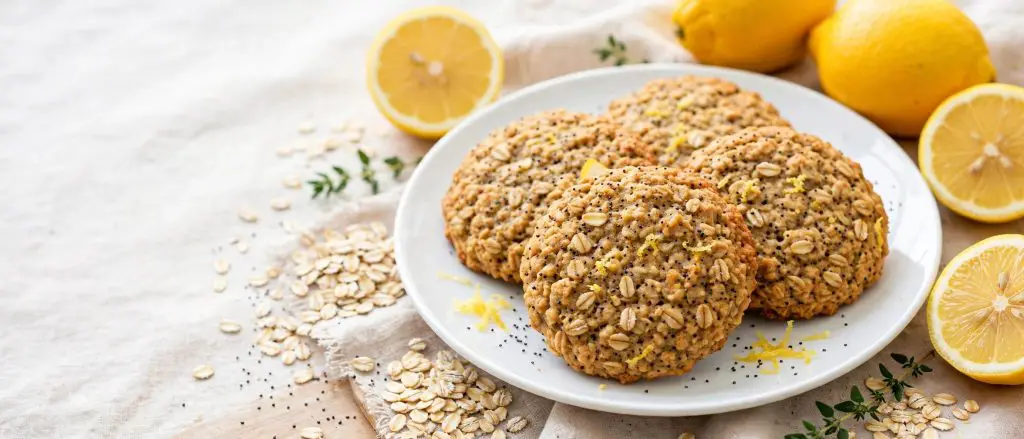
Soft, golden, and speckled with bright lemon zest, these Healthy Lemon Poppy Seed Oatmeal Cookies are proof that “no sugar added” doesn’t mean flavorless. Built on a simple base of rolled oats and almond flour, sweetened naturally with a touch of vanilla and the citrusy punch of fresh lemon, this easy recipe comes together in just four steps: mix, scoop, bake, and cool. The result is a chewy, oat-forward cookie with crisp edges and a soft center — the kind of wholesome treat you can enjoy with your morning coffee or pack as an afternoon snack without worrying about a sugar crash.
Why It’s Good for Diabetics
What makes this cookie diabetic-friendly starts with what’s missing: there’s no granulated sugar, brown sugar, or syrup anywhere in the ingredient list. Instead, sweetness and flavor come from lemon zest, lemon juice, and vanilla extract — all of which add bold taste with essentially zero impact on blood glucose.
The flour base is just as important. Rolled oats are a whole grain rich in beta-glucan, a type of soluble fiber that has been widely studied for its ability to slow carbohydrate digestion and moderate the rise in blood sugar after eating. Pairing oats with almond flour — rather than refined white flour — further lowers the overall carbohydrate density of the cookie while adding protein, fiber, and heart-healthy monounsaturated fats. That combination of fiber, protein, and fat is exactly what helps prevent the fast glucose spikes associated with typical sugar-and-white-flour baked goods.
Poppy seeds, folded into the dough, contribute crunch and a subtle nutty flavor with virtually no carbohydrate content, plus small amounts of minerals like calcium and manganese. Coconut oil, used in place of butter, provides medium-chain fats that many people managing blood sugar find easier to digest and metabolize than some other fats. Altogether, this cookie leans on whole-food ingredients that digest slowly and steadily, rather than the rapid-burning refined carbs found in a traditional lemon cookie.
Ingredients & Substitutes
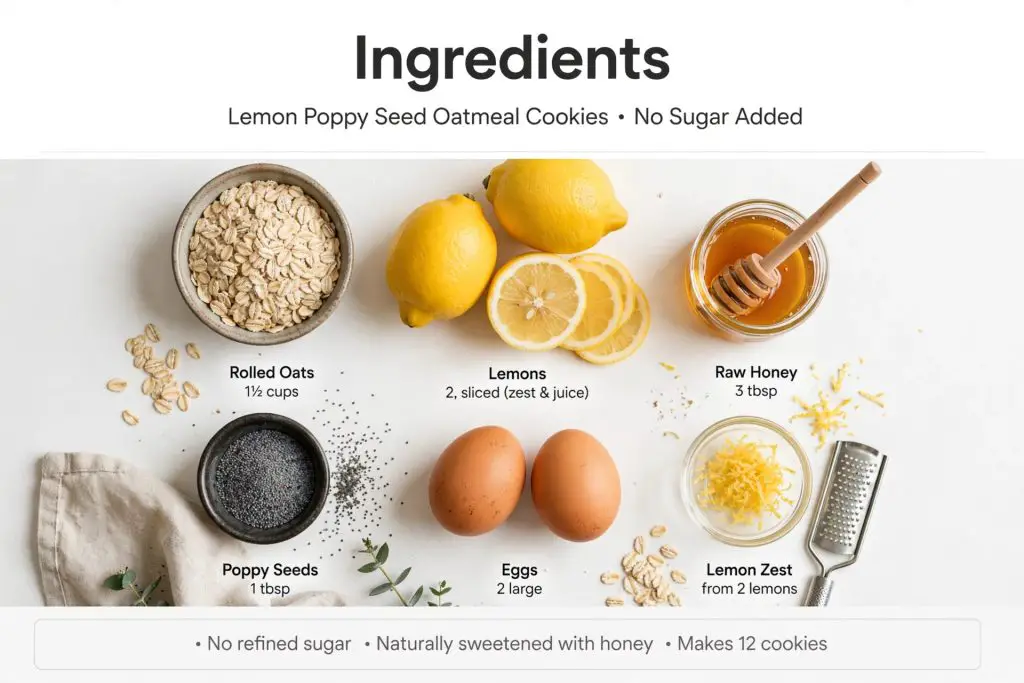
- 1 ½ cups rolled oats — old-fashioned oats give the best chew; use certified gluten-free oats if needed.
- 1 cup almond flour — finely ground blanched almond flour works best; almond meal can be substituted for a slightly coarser texture.
- 1 lemon, zested + 2 tbsp lemon juice — use organic lemons when possible since the zest is included; bottled lemon juice can substitute for fresh in a pinch.
- 1 tbsp poppy seeds — for the classic lemon poppy seed flavor and crunch; chia seeds can be used as a visual substitute, though the flavor will differ slightly.
- 1 egg — binds the dough; a flax egg (1 tbsp ground flaxseed mixed with 3 tbsp water, rested 5 minutes) works as an egg-free alternative.
- 3 tbsp coconut oil, melted — adds richness and moisture; melted butter can be substituted if coconut flavor isn’t desired.
- ½ tsp baking powder — provides a light, soft lift.
- Pinch of salt — balances and brightens the other flavors.
- 1 tsp vanilla extract — rounds out the lemon with warmth and depth.
- Optional: 1–2 tbsp water — add only if the dough feels too dry or crumbly to scoop.
Step-by-Step Instructions
1. Mix In a large mixing bowl, stir together the rolled oats, almond flour, lemon zest, poppy seeds, baking powder, and salt. In a separate small bowl, whisk the egg with the melted coconut oil, lemon juice, and vanilla extract. Pour the wet mixture into the dry ingredients and stir until a thick, cohesive dough forms. If the dough seems too dry to hold together, add water one tablespoon at a time until it comes together.
2. Scoop Preheat the oven to 325°F (165°C) and line a baking sheet with parchment paper. Using a small cookie scoop or a spoon, portion the dough into rounded balls of about 1½ tablespoons each. Place them on the prepared baking sheet, spacing them roughly 2 inches apart, and gently flatten each one slightly with your palm or the back of a spoon — they won’t spread much on their own.
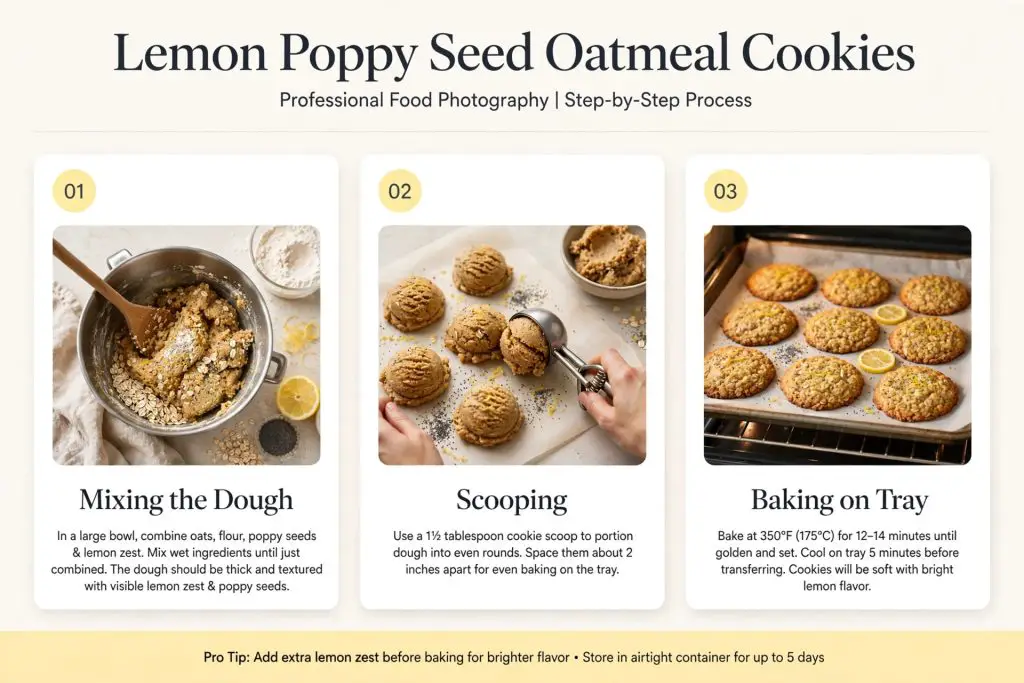
3. Bake Bake for 12–14 minutes, until the edges are lightly golden and the tops feel just set. The centers may look slightly soft when you pull them out — that’s expected, and they’ll continue to firm up as they cool.
4. Cool Let the cookies rest on the baking sheet for about 5 minutes before transferring them to a wire cooling rack. Allow them to cool completely, about 10–15 minutes, before serving or storing. This recipe makes approximately 12 cookies.
Nutritional Facts (per cookie, ~12 cookies)
Calories: 100 | Net Carbs: 6g | Fiber: 2g | Sugar: 0g (naturally occurring only) | Fat: 7g | Protein: 3g
Baker’s Tips
- Zest before you juice: Zest the lemon first, then squeeze it for the juice — trying to zest an already-juiced lemon is much harder.
- Dough consistency: This dough is thicker than a typical cookie batter; if it feels too crumbly to scoop, add the optional water a little at a time rather than all at once.
- Storage: Keep cooled cookies in an airtight container at room temperature for up to 5 days.
- Freezing: These freeze well for up to 3 months — layer them between sheets of parchment paper in a freezer-safe container, and thaw at room temperature for about 20 minutes before eating.
- Make-ahead dough: You can scoop the dough into balls and freeze them unbaked; bake straight from frozen, adding 2–3 extra minutes to the bake time.
Frequently Asked Questions (FAQ)
Can I leave out the poppy seeds? Yes — the cookies will still have plenty of lemon flavor without them; they simply add crunch and visual speckling.
Is there a way to add a touch of sweetness without sugar? If you’d like the cookies slightly sweeter, you can add 2–3 tablespoons of a granulated monk fruit or erythritol sweetener to the dry ingredients without changing the rest of the method.
Why did my cookies turn out dry? This can happen if too much oat flour forms as the oats break down during mixing, or if the dough sits too long before baking. Adding a tablespoon of water and baking promptly usually solves it.
Are these cookies gluten-free? Yes, as long as you use certified gluten-free rolled oats, since oats are often processed alongside wheat.
This recipe is for general informational purposes and isn’t a substitute for advice from a doctor or registered dietitian, especially if you’re managing diabetes or blood sugar levels.