Introduction
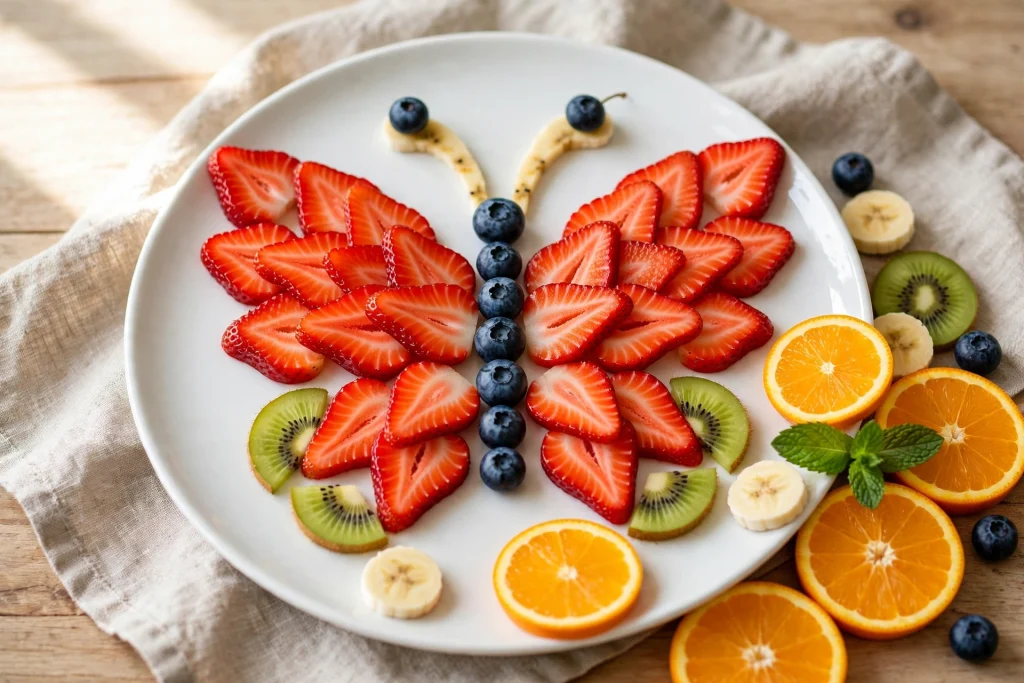
Sometimes the best way to get a picky eater excited about fruit is to stop calling it a snack and start calling it art. This Butterfly Fruit Plate arranges strawberries, kiwi, and blueberries into a colorful, symmetrical butterfly shape, turning a simple fruit plate into something a kid will want to look at, talk about, and — most importantly — actually eat. With no cooking involved and just a few minutes of slicing and arranging, this is an easy weekend project to do together, a fun addition to a birthday spread, or a way to make an ordinary afternoon snack feel like a small event.
Why It Works So Well for Picky Eaters
The core idea here is presentation, not disguise. Unlike recipes that hide vegetables inside muffins or quesadillas, this one puts the fruit front and center — but frames it as a creative, playful design rather than a plain plate of sliced produce. Kids are naturally drawn to color, pattern, and novelty, and arranging fruit into a recognizable shape like a butterfly taps directly into that appeal, making the food itself feel like a reward for participating rather than an obligation to get through.
Nutritionally, this plate is essentially unprocessed fruit, so it delivers vitamin C, fiber, and antioxidants without needing any added sugar or sweetener at all. Strawberries and kiwi are both good sources of vitamin C, which supports immune function, while blueberries contribute anthocyanins, plant compounds associated with reduced oxidative stress in the body. Because the “recipe” is simply fresh fruit cut and arranged, there’s no need to worry about added ingredients diluting the nutritional value — what you see is essentially what you get.
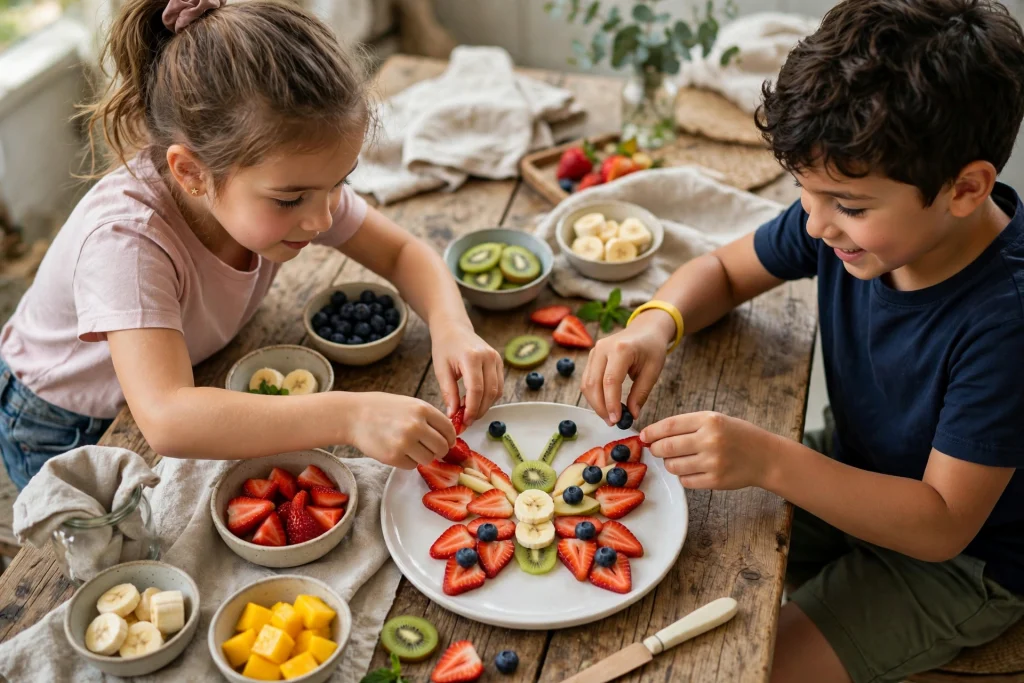
This activity also has a strong hands-on, participatory element. Letting a child help arrange the strawberry “wings,” place the blueberry antennae, or choose where the kiwi “body” goes gives them ownership over the finished plate, and kids are consistently more willing to eat food they had a hand in creating. It’s a low-pressure way to build positive associations with fruit, especially for a child who might otherwise resist eating it on a plain plate.
Ingredients
- 8–10 medium strawberries, hulled and sliced — forms the butterfly’s wings; choose ripe, evenly sized strawberries for the most even slices.
- 2 kiwis, peeled and sliced into rounds — forms the butterfly’s body.
- A small handful of blueberries (about 15–20) — used to outline the wings and form the antennae.
- Optional: a small amount of yogurt or a light honey drizzle — can be added as a dip or light glaze if desired, though the plate is naturally sweet without it.
Step-by-Step Instructions
- Prepare the fruit. Hull the strawberries and slice each one in half lengthwise, so you have two flat, wing-shaped halves per berry. Peel the kiwis and slice them into thin, even rounds.
- Set the base. Use a plate or a flat serving tray as your canvas. If desired, place a thin round of bread, a pancake, or a slice of cheese in the center first as a subtle base for the design — this isn’t necessary but can add a bit of structure.
- Build the wings. Arrange the strawberry halves in a fan shape on either side of the center of the plate, cut side facing inward, points facing outward, to form two symmetrical “wings.” Layer 2–3 rows of strawberries per wing for a fuller look, largest pieces toward the outer edge.
- Add the body. Place the kiwi rounds in a vertical line down the center of the plate, between the two strawberry wings, to form the butterfly’s body.
- Outline with blueberries. Line the outer edges of the strawberry wings with blueberries to add contrast and definition to the wing shapes.
- Add the antennae. At the top of the kiwi body, place two small strawberry stems, thin apple slivers, or two blueberries on short lines of yogurt or thin fruit strips to represent the butterfly’s antennae, curving them slightly outward.
- Serve immediately. This plate is best enjoyed fresh, since strawberries and kiwi can release juice and soften slightly if left to sit too long.
Nutritional Facts (per serving, about ¼ of the plate)
Calories: 45 | Carbs: 11g | Fiber: 2g | Sugar: 7g (naturally occurring) | Fat: 0g | Protein: 1g
Tips for Best Results
- Choose ripe but firm fruit: Overripe strawberries or kiwi can be difficult to slice cleanly and may fall apart when arranged, so look for fruit that’s ripe but still holds its shape well.
- Slice just before serving: Cut fruit browns and softens over time, so assemble the plate as close to serving time as possible for the best appearance and texture.
- Let kids help arrange it: Placing the blueberries or positioning the strawberry wings is a simple, low-mess task most kids can do themselves, which increases their investment in eating the final result.
- Customize the design: This same technique works for other fruit-based shapes — try a flower using orange segments, a fish using melon slices, or a simple heart using strawberries alone.
- Add protein if needed: Serve alongside a small dollop of yogurt or a few cheese cubes on the side to round out the snack with some protein.
Frequently Asked Questions (FAQ)
Can I make this ahead of time? It’s best assembled shortly before serving, since cut strawberries and kiwi can release liquid and look less vibrant after sitting for a few hours. If needed, slice the fruit ahead and store separately, then arrange just before serving.
What other fruits can I use if my child doesn’t like strawberries or kiwi? Mango slices, orange segments, or thinly sliced apple can work well as substitutes for the wings, and a banana half or a slice of melon can stand in for the body.
Is this a good option for a party or special occasion? Yes — this plate works well as a fun centerpiece for a kid’s birthday party, a themed classroom snack day, or simply as a special weekend treat that feels a bit more exciting than a plain fruit bowl.
How can I get an especially picky eater to try it? Let them help build it rather than presenting a finished plate — kids who participate in arranging the fruit are often much more willing to eat the pieces they placed themselves.
Is there a way to add extra nutrition without changing the look much? A light sprinkle of chia seeds or a few small dollops of yogurt tucked between the fruit pieces can add fiber or protein without disrupting the overall butterfly design.
🐦 Kicau Mania
Nikmati suara burung terbaik setiap hari! Rawat, latih, dan cintai burung kicauanmu.