Introduction
Making pancakes for more than one or two people usually means standing at the stove, flipping batch after batch while everyone else’s food gets cold. A sheet pan pancake solves that problem entirely: you pour one batter into a single pan, slide it into the oven, and walk away for 20 minutes. What comes out is a big, evenly golden pancake that you slice into squares like a cake — same fluffy texture, same comforting flavor, but built to feed a whole table at once without you missing breakfast yourself.
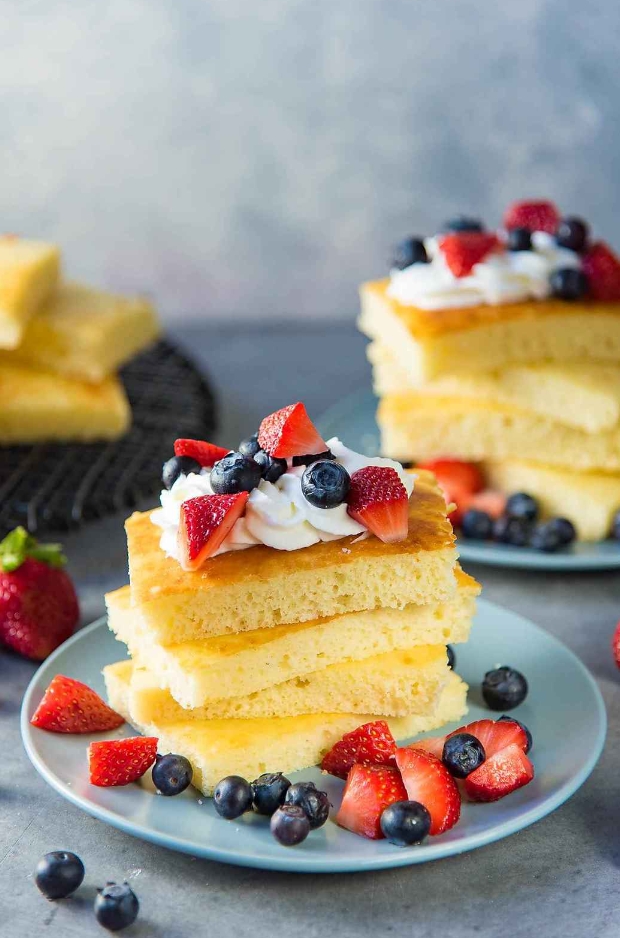
This version was designed specifically with blood sugar in mind. Traditional pancake batter is one of the more carb-dense breakfasts out there, built on white flour and topped with syrup that sends blood sugar climbing fast. Here, that foundation is swapped out: a mix of almond flour and oat flour replaces most or all of the refined white flour, a granulated sugar substitute stands in for sugar in the batter, and the toppings lean on fresh fruit and a light drizzle of sugar-free syrup rather than a heavy pour of the real thing. The result is a pancake that still puffs up nicely and tastes genuinely sweet, without the batter or toppings working against you.
Because it bakes as one large pancake, this recipe is also just practical. There’s no standing over a hot griddle, no guessing when to flip, and no first pancake that always seems to turn out wrong. It’s an easy weekend breakfast, but it’s simple enough to make on a weekday too, especially if you’re cooking for a family with different tastes — everyone can pick their own toppings once it’s sliced into squares.
Ingredients
- 1 cup almond flour
- ½ cup oat flour
- ¼ cup granulated erythritol or monk fruit sweetener
- 2 tsp baking powder
- ½ tsp cinnamon
- ¼ tsp salt
- 2 large eggs
- 1 cup unsweetened almond milk (or milk of choice)
- 2 tbsp melted butter or coconut oil, plus extra for greasing the pan
- 1 tsp vanilla extract
- 1 cup fresh berries (blueberries, sliced strawberries, or a mix)
- Optional toppings: sugar-free maple syrup, a dollop of plain Greek yogurt, a few extra berries
A quick note on ingredients: almond flour and oat flour together give a better texture than either one alone — almond flour alone can make the pancake dense, while oat flour alone can make it slightly gummy, so the combination strikes a good balance. If you don’t have oat flour, you can pulse old-fashioned rolled oats in a blender or food processor until finely ground. As with other recipes in this style, make sure your sweetener is a granulated, cup-for-cup sugar substitute like erythritol or monk fruit, since liquid sweeteners will change the texture of the batter. Fresh berries are recommended over frozen here, since frozen berries release extra moisture into the batter as they bake, which can leave the center slightly underdone.
How to Make
- Preheat the oven to 375°F (190°C). Grease a 9×13-inch sheet pan or baking dish generously with butter or coconut oil, making sure to coat the corners well so the pancake doesn’t stick.
- In a large bowl, whisk together the almond flour, oat flour, sweetener, baking powder, cinnamon, and salt until evenly combined.
- In a separate bowl, whisk the eggs, then add the almond milk, melted butter, and vanilla extract, whisking until smooth.
- Pour the wet ingredients into the dry ingredients and stir just until combined — a few small lumps are fine, and overmixing can make the pancake denser than it needs to be.
- Pour the batter into the prepared pan and spread it out evenly with a spatula, making sure it reaches all four corners.
- Scatter the fresh berries evenly over the top of the batter, pressing them in very lightly so they don’t roll around once baking starts.
- Bake for 18–22 minutes, until the pancake is puffed and golden on top, and a toothpick inserted into the center comes out clean.
- Let the pancake cool in the pan for about 5 minutes before slicing into squares. Serve warm, with your choice of toppings.
Why Is This a Diabetic-Friendly Recipe?
The single biggest change here is the flour itself. Replacing refined white flour with almond flour and oat flour brings in fiber, protein, and healthy fats that all slow down how quickly the carbohydrates in the pancake are digested, which helps prevent the sharp blood sugar spike that a traditional white-flour pancake can cause. Oat flour in particular contains beta-glucan, a soluble fiber that has been studied specifically for its role in moderating post-meal blood sugar response, so its presence here isn’t just about texture.
On the sweetener side, using a granulated erythritol or monk fruit blend instead of sugar keeps the batter genuinely sweet-tasting without contributing to blood glucose the way table sugar would. The same logic applies to the toppings: fresh berries are naturally lower in sugar and higher in fiber than most other fruits, and a sugar-free syrup avoids the concentrated sugar hit that regular maple syrup delivers in just a tablespoon or two. Even the eggs and butter play a small supporting role, since the fat and protein they add help further slow digestion, rounding out a breakfast that’s far gentler on blood sugar than its traditional counterpart while still delivering the same comforting flavor and fluffy texture people actually want from a pancake.
Nutrition (per square, makes 9 squares)
- Calories: ~140
- Net Carbs: ~5g
- Protein: ~6g
- Fat: ~10g
- Fiber: ~2g
How to Store
Let any leftover squares cool completely, then store them in an airtight container in the refrigerator for up to 4 days. To reheat, warm them in a toaster oven or regular oven at 300°F for about 5 minutes, which helps them keep their texture better than a microwave would, though a microwave works fine in a pinch for a softer result. To freeze, place the cooled squares in a single layer on a tray until firm, then transfer them to a freezer-safe bag or container, separating layers with parchment paper if stacking. They’ll keep in the freezer for up to 2 months. Reheat frozen squares directly from frozen in a toaster oven or regular oven at 300°F for about 10 minutes, or thaw overnight in the refrigerator first for a quicker reheat.