Cottage cheese has become a surprise star ingredient in high-protein baking, and for good reason: blended smooth, it disappears into batter while adding a substantial protein boost and a moist, tender crumb. These Cottage Cheese Chocolate Chip Cookies take that trick and apply it to a classic favorite, pairing a protein-rich, low-sugar dough with pockets of dark chocolate for a cookie that feels indulgent but works hard nutritionally. With almond flour standing in for white flour and a sugar substitute in place of table sugar, this is a chocolate chip cookie built to support steadier blood sugar and keep you satisfied longer than a typical sweet treat.

Why It’s Good for Diabetics
The star nutritional feature here is protein. A single serving of cottage cheese packs a meaningful amount of casein protein, which digests slowly and helps blunt the blood sugar response to any carbohydrates eaten alongside it. When blended smooth and mixed into cookie dough, cottage cheese adds this protein boost without any noticeable cheese flavor or texture, making these cookies a genuinely higher-protein alternative to a standard chocolate chip cookie.
Protein isn’t the only thing working in this recipe’s favor. Almond flour replaces refined white flour as the base, which lowers the overall carbohydrate density while adding fiber and healthy monounsaturated fat — both of which slow digestion and help prevent the sharp glucose spikes associated with high-glycemic baked goods. The sugar substitute (typically erythritol, allulose, or a monk fruit blend) provides sweetness with a glycemic index near zero, meaning it doesn’t trigger the same insulin response as table sugar. Dark chocolate chips, ideally 85% cacao or higher and sugar-free, contribute rich chocolate flavor with minimal added sugar compared to standard milk chocolate chips.
Together, the combination of casein protein, fiber-rich almond flour, and healthy fat means this cookie digests more slowly and provides more lasting satiety than a traditional sugar-and-white-flour cookie — a helpful profile for anyone managing blood sugar, since slower digestion generally translates to a gentler impact on glucose levels.
Ingredients & Substitutes
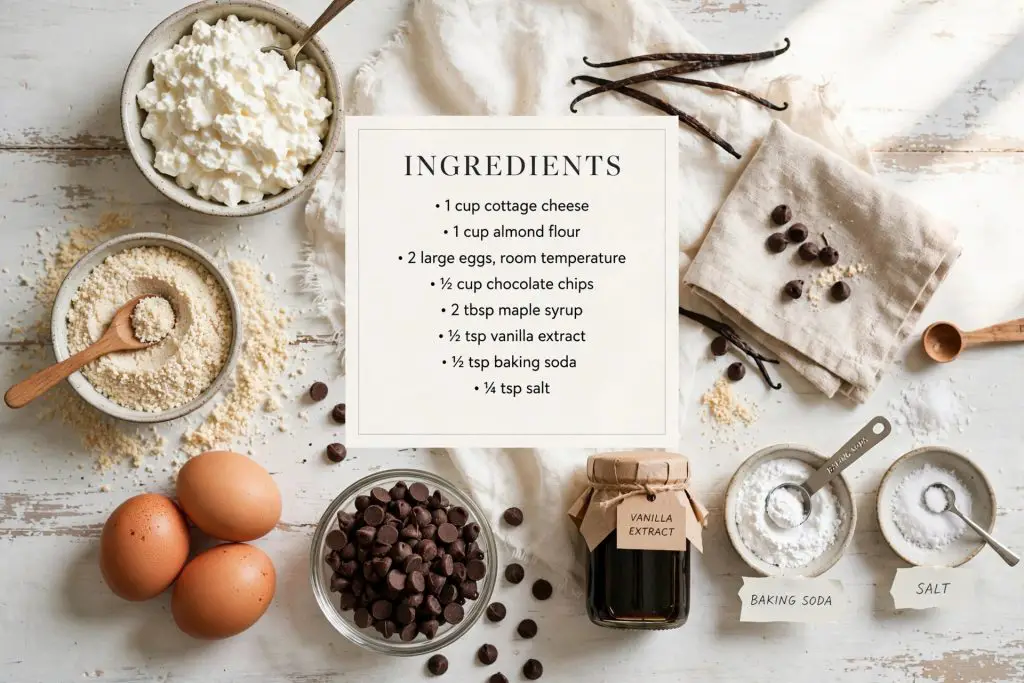
- 1 cup full-fat cottage cheese, blended smooth — blending is essential to eliminate curds; low-fat cottage cheese can be used but will yield a slightly less rich texture.
- 1 ¾ cups almond flour — finely ground blanched almond flour works best; oat flour can replace up to half of the almond flour for a chewier texture.
- ½ cup granulated erythritol or allulose — allulose caramelizes more like real sugar and can improve browning; monk fruit blends also work well.
- 1 egg — helps bind the dough; can be replaced with a flax egg (1 tbsp ground flaxseed + 3 tbsp water) for an egg-free version.
- 2 tbsp melted butter or coconut oil — adds richness alongside the cottage cheese’s moisture.
- 1 tsp vanilla extract — rounds out the sweetness.
- ½ tsp baking soda — provides lift.
- Pinch of salt — balances the sweetness and enhances the chocolate flavor.
- ⅓ cup sugar-free dark chocolate chips (85%+ cacao) — regular dark chocolate chopped small can substitute in moderation if sugar-free chips aren’t available.
Step-by-Step Instructions
- Blend the cottage cheese. Add the cottage cheese to a blender or food processor and blend for 30–60 seconds until completely smooth, with no visible curds. This step is key to a good texture, so don’t skip it.
- Preheat the oven to 350°F (175°C) and line a baking sheet with parchment paper.
- Combine wet ingredients. In a mixing bowl, whisk together the blended cottage cheese, egg, melted butter, erythritol, and vanilla extract until smooth and well combined.
- Add dry ingredients. Stir in the almond flour, baking soda, and salt, mixing just until a thick, slightly sticky dough forms — avoid overmixing.
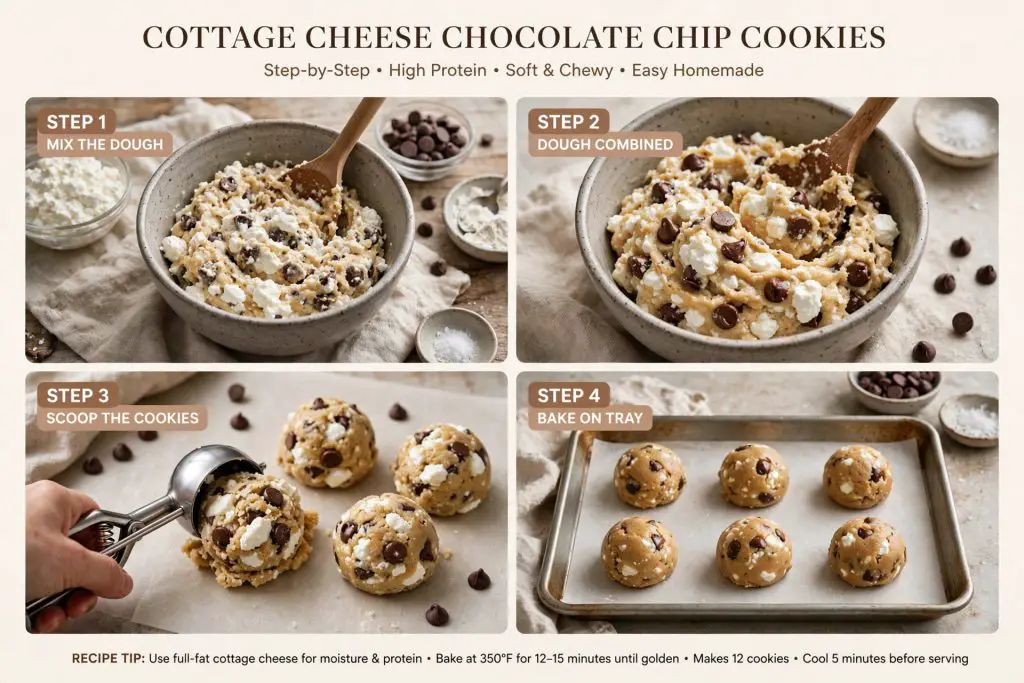
- Fold in the chocolate chips. Gently fold in the sugar-free chocolate chips, distributing them evenly throughout the dough.
- Scoop and shape. Using a cookie scoop or spoon, portion the dough into rounded mounds of about 1½ tablespoons each, spacing them 2 inches apart on the prepared sheet. Flatten each slightly, as this dough holds its shape more than a traditional cookie dough and won’t spread much on its own.
- Bake. Bake for 12–14 minutes, until the edges are golden and the centers look set but still soft.
- Cool. Let the cookies cool on the baking sheet for 5–10 minutes before transferring to a wire rack, as they firm up significantly as they cool. This recipe makes about 14 cookies.
Nutritional Facts (per cookie, ~14 cookies)
Calories: 105 | Net Carbs: 3g | Fiber: 2g | Sugar: 1g | Fat: 8g | Protein: 5g
Baker’s Tips
- Don’t skip blending: Unblended cottage cheese curds will show up as small lumps in the finished cookie — a smoothie blender or mini food processor works well for a fully smooth result.
- Chill for thicker cookies: If you prefer a thicker, less spread-out cookie, chill the shaped dough balls in the refrigerator for 15–20 minutes before baking.
- Storage: Because of the cottage cheese, these cookies are more moisture-rich than a typical low-carb cookie — store them in the refrigerator in an airtight container for up to 5 days rather than at room temperature.
- Freezing: These freeze well for up to 2 months; thaw in the refrigerator overnight before serving.
- Boosting protein further: For an extra protein boost, a tablespoon of unflavored or vanilla whey or casein protein powder can be added to the dry ingredients, with a splash of extra liquid if the dough becomes too dry.
Frequently Asked Questions (FAQ)
Will I be able to taste the cottage cheese? No — once fully blended and baked, the cottage cheese disappears into the dough, contributing moisture and protein without any noticeable tang or texture.
Can I use ricotta instead of cottage cheese? Yes, ricotta can be substituted in a similar quantity, though it has a slightly different texture and will yield a marginally denser cookie.
Why do these need to be refrigerated instead of stored at room temperature? Because they contain dairy in the form of cottage cheese, refrigeration helps keep the cookies fresh and food-safe for longer than a typical shelf-stable cookie.
Can I make these nut-free? Yes — substitute the almond flour with an equal amount of sunflower seed flour or a 1:1 gluten-free baking blend, though the texture may vary slightly.
This recipe is for general informational purposes and isn’t a substitute for advice from a doctor or registered dietitian, especially if you’re managing diabetes or blood sugar levels.