Supporting Baby’s Brain, Eyes, and a Healthier Pregnancy — One Nutrient at a Time
Pregnancy changes almost everything about how a woman’s body functions, and few nutrients illustrate this shift as clearly as omega-3 fatty acids. These essential fats — which the body cannot produce on its own — become increasingly important as pregnancy progresses, playing a direct role in the baby’s developing brain, eyes, and nervous system. Yet many expecting mothers don’t get enough of them through diet alone. Understanding why omega-3s matter so much during this time, and how to get more of them, can make a meaningful difference for both mother and baby.
What Omega-3s Actually Do
Omega-3 fatty acids are a family of polyunsaturated fats, with three main types relevant to human health: ALA (alpha-linolenic acid), found primarily in plant sources like flaxseed and walnuts; and DHA (docosahexaenoic acid) and EPA (eicosapentaenoic acid), found mainly in fatty fish and seafood. Of these, DHA is by far the most critical during pregnancy. It’s a major structural component of the brain and retina, meaning it’s literally built into the physical architecture of a developing baby’s nervous system and eyes. The body can convert some ALA into DHA and EPA, but this conversion process is inefficient, which is why direct sources of DHA — primarily from fish — are considered the most reliable way to meet increased needs during pregnancy.
Why Needs Increase So Significantly During Pregnancy
During the third trimester in particular, a baby’s brain undergoes a period of extremely rapid growth, and DHA accumulates in fetal brain tissue at a faster rate than at almost any other point in development. The baby draws this DHA directly from the mother’s bloodstream, meaning maternal intake directly influences how much is available for this critical developmal window. If dietary intake is insufficient, the baby will still draw on the mother’s existing DHA reserves, which can leave her own levels depleted — a phenomenon researchers sometimes refer to as “maternal depletion.” This is one of the reasons some women report feeling foggier or more fatigued in the postpartum period, and adequate omega-3 intake during pregnancy may help mitigate this effect to some degree.
The Research Behind DHA and Brain Development
Numerous studies have examined the relationship between maternal DHA intake and infant outcomes. Research has associated higher maternal DHA levels with improved measures of infant visual acuity, since DHA is heavily concentrated in the retina and plays a direct role in how the eye processes light and images. Other research has explored links between prenatal DHA intake and cognitive and behavioral outcomes in early childhood, including attention and problem-solving skills, though this remains an active area of ongoing study. Beyond neurological development, omega-3s have also been studied for their potential role in reducing the risk of preterm birth, supporting healthy birth weight, and possibly lowering the risk of certain pregnancy complications, such as preeclampsia — though research in these areas continues to evolve and results are not universally consistent across all studies.
Benefits for the Mother, Not Just the Baby
While much of the conversation around omega-3s in pregnancy centers on fetal development, these fatty acids matter for the mother’s health as well. DHA and EPA have anti-inflammatory properties and are commonly studied for their role in cardiovascular health, which is relevant given the significant changes to blood volume and heart function that occur during pregnancy. Some research has also explored a potential link between omega-3 intake and a reduced risk of postpartum depression, likely related to DHA’s role in brain function and mood regulation, though — as with many areas of perinatal nutrition research — more studies are needed to fully understand this relationship.
Where to Get More Omega-3s
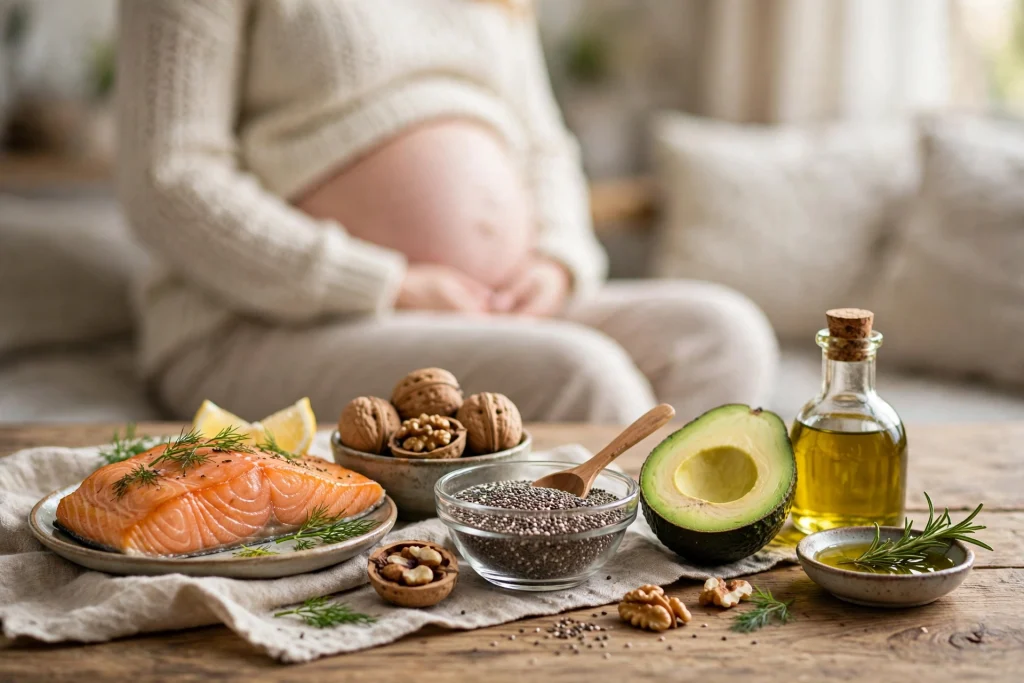
The most concentrated and bioavailable sources of DHA and EPA are fatty fish, particularly low-mercury options such as salmon, sardines, trout, and anchovies. Health guidelines generally recommend that pregnant women aim for two to three servings of low-mercury fish per week to meet increased omega-3 needs, while avoiding high-mercury fish like shark, swordfish, king mackerel, and tilefish, which can pose risks to fetal neurological development. For those who don’t eat fish regularly, DHA-fortified eggs offer a convenient alternative, and plant-based sources like chia seeds, flaxseed, walnuts, and hemp seeds provide ALA, which contributes to overall omega-3 intake even if conversion to DHA is limited.
When to Consider a Supplement
Because dietary intake alone can be difficult to guarantee — especially for women who don’t regularly eat fish, or who experience nausea or food aversions that limit their diet — many healthcare providers recommend a prenatal DHA supplement, either as a standalone supplement or as part of a comprehensive prenatal vitamin. Algae-based DHA supplements are also available and offer a fish-free option that still provides direct DHA, making them suitable for vegetarian or vegan mothers. The appropriate dosage can vary based on individual dietary intake and health history, which is why this is a conversation worth having directly with a doctor or midwife.
Practical Tips for Increasing Omega-3 Intake
- Aim for two to three servings of low-mercury fish per week, such as salmon, sardines, or trout, prepared fully cooked.
- Add a spoonful of ground flaxseed or chia seeds to smoothies, oatmeal, or yogurt for a simple plant-based ALA boost.
- Keep a small handful of walnuts on hand as an easy, portable snack.
- Consider DHA-fortified eggs as an accessible daily source if fish isn’t a regular part of your diet.
- Discuss supplementation with your provider if dietary sources feel inconsistent or insufficient, particularly if you’re vegetarian, vegan, or have limited access to fresh fish.
A Final Note
Omega-3 fatty acids, and DHA in particular, represent one of the clearest examples of how a mother’s nutrition directly shapes her baby’s development — quite literally becoming part of the physical structure of the developing brain and eyes. While the exact amount needed can vary based on individual circumstances, the underlying message is consistent: prioritizing omega-3 intake during pregnancy is one of the more evidence-supported nutritional steps an expecting mother can take. As always, discussing your specific dietary needs, fish safety guidelines, and whether supplementation is right for you with your doctor or a registered dietitian will help ensure this advice is tailored appropriately to your own pregnancy.