Dried fruits are an excellent food choice for pregnant women. They offer a concentrated source of energy, vitamins, and minerals, and they’re easy to carry and eat as a snack between main meals. Here are the most important types, their benefits, and the recommended daily amount for each.
1. Dates
Importance During Pregnancy
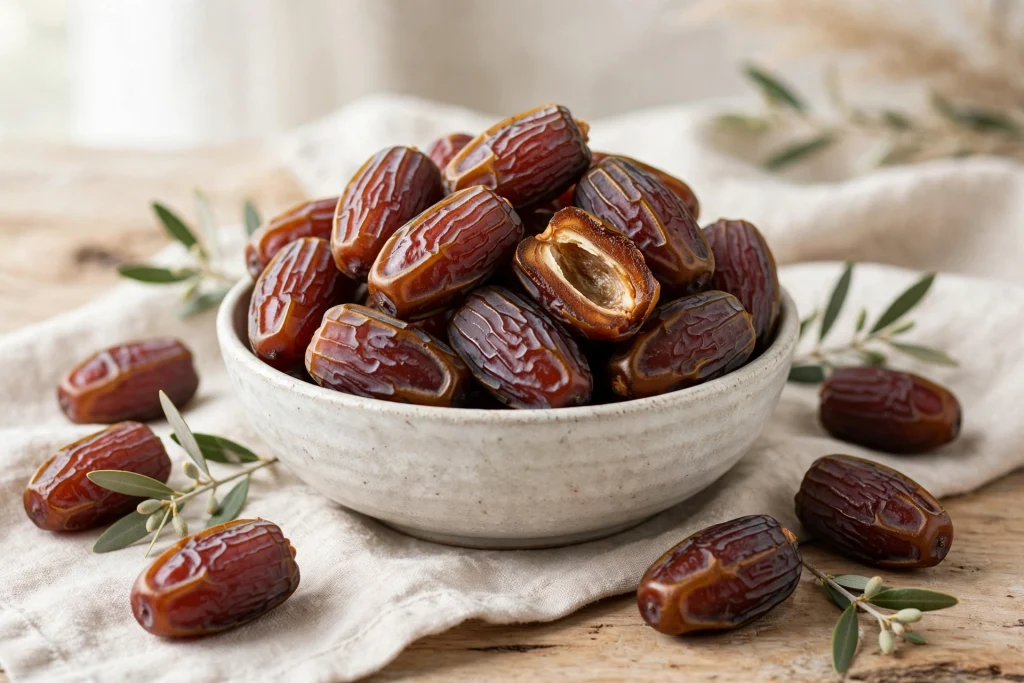
Dates are considered one of the most important dried fruits for pregnant women, especially during the third trimester. Some studies suggest that regular date consumption in the final weeks of pregnancy may help facilitate natural labor and shorten its duration, thanks to compounds that act similarly to oxytocin, which stimulates uterine contractions. Dates also provide a quick and sustained source of energy, and their high fiber content helps combat the constipation that is common during pregnancy.
Nutrition Facts (per 100g, approx.)
- Calories: 280 kcal
- Fiber: 7 g
- Potassium: 656 mg
- Iron: 1 mg
- Magnesium: 54 mg
- Vitamin B6: 0.2 mg
Recommended Amount
3 to 6 dates per day, and this can be gradually increased in the final weeks of pregnancy (with a doctor’s approval), while being mindful not to overconsume due to their high natural sugar content.
2. Raisins
Importance During Pregnancy
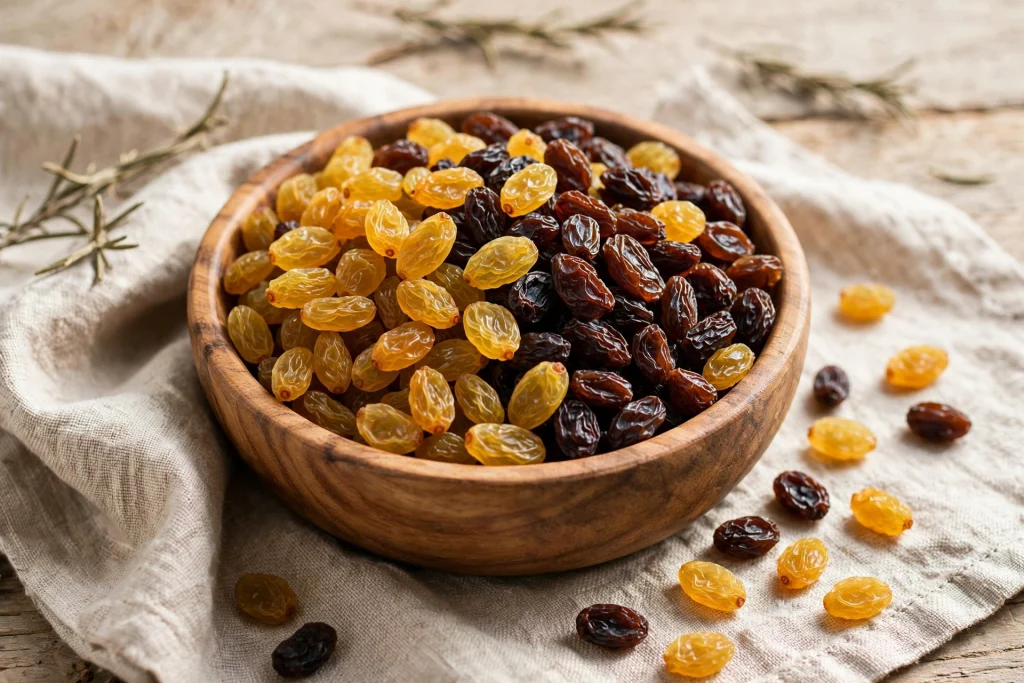
Raisins are rich in iron, which helps prevent the anemia that is common during pregnancy. They also contain calcium and boron, both of which support bone health for mother and baby. Their natural fiber content helps improve digestion as well.
Nutrition Facts (per 100g, approx.)
- Calories: 299 kcal
- Fiber: 3.7 g
- Iron: 1.9 mg
- Calcium: 50 mg
- Potassium: 749 mg
Recommended Amount
A small handful (about 30-40g, or 2 tablespoons) per day, since raisins have a fairly concentrated sugar content relative to their size.
3. Dried Apricots
Importance During Pregnancy
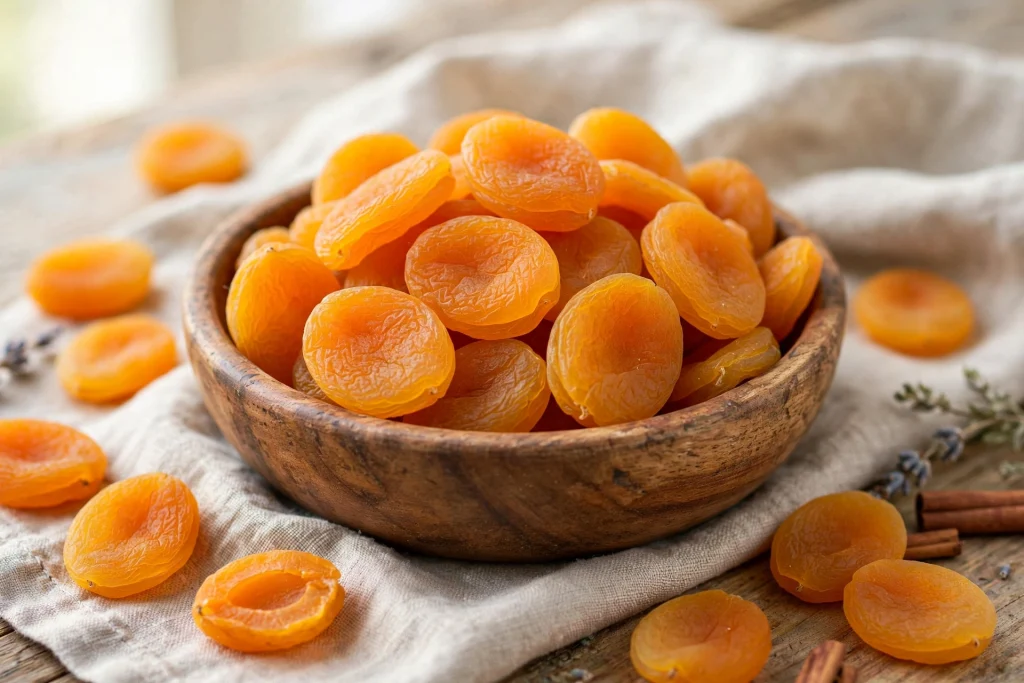
Dried apricots are high in iron and vitamin A, both essential for supporting fetal growth and red blood cell formation in the mother. They also contain potassium, which helps regulate blood pressure — particularly important for women at risk of preeclampsia.
Nutrition Facts (per 100g, approx.)
- Calories: 241 kcal
- Fiber: 7.3 g
- Iron: 2.7 mg
- Vitamin A: 180 mcg
- Potassium: 1160 mg
Recommended Amount
4 to 6 pieces per day (about 30g), choosing varieties free of added sugar or sulfur preservatives when possible.
4. Prunes (Dried Plums)
Importance During Pregnancy
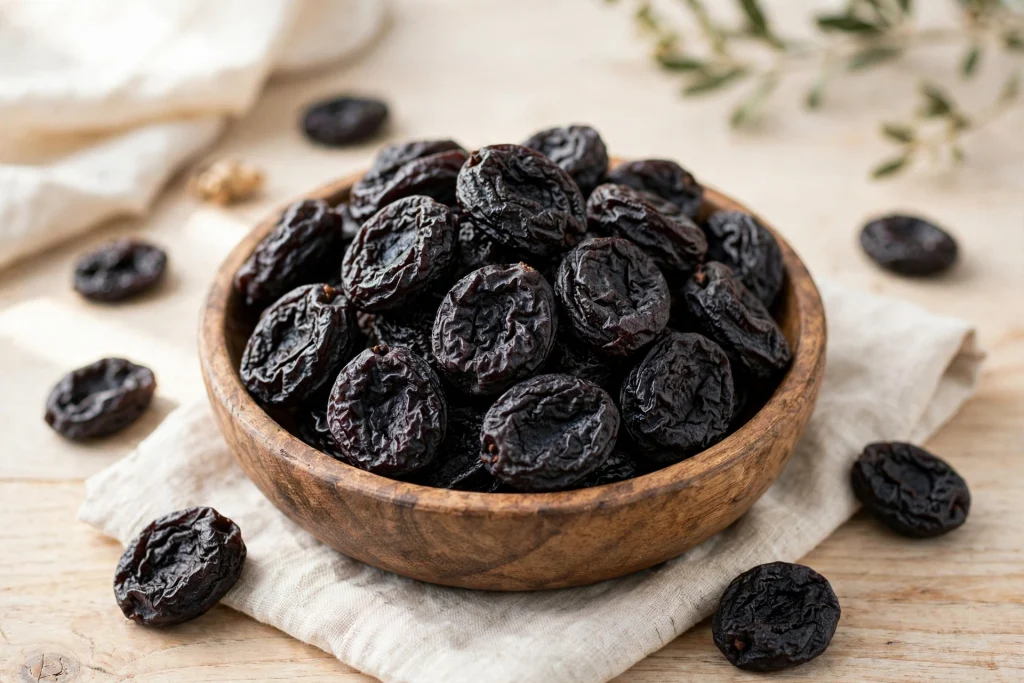
Prunes are well known for their strong effectiveness in relieving constipation, one of the most common digestive issues during pregnancy caused by hormonal changes. They also contain vitamin K, essential for blood clotting, along with antioxidants that help reduce inflammation in the body.
Nutrition Facts (per 100g, approx.)
- Calories: 240 kcal
- Fiber: 7.1 g
- Vitamin K: 59.5 mcg
- Potassium: 732 mg
- Iron: 0.9 mg
Recommended Amount
3 to 5 prunes per day. It’s best to start with a small amount to avoid diarrhea from their strong natural laxative effect.
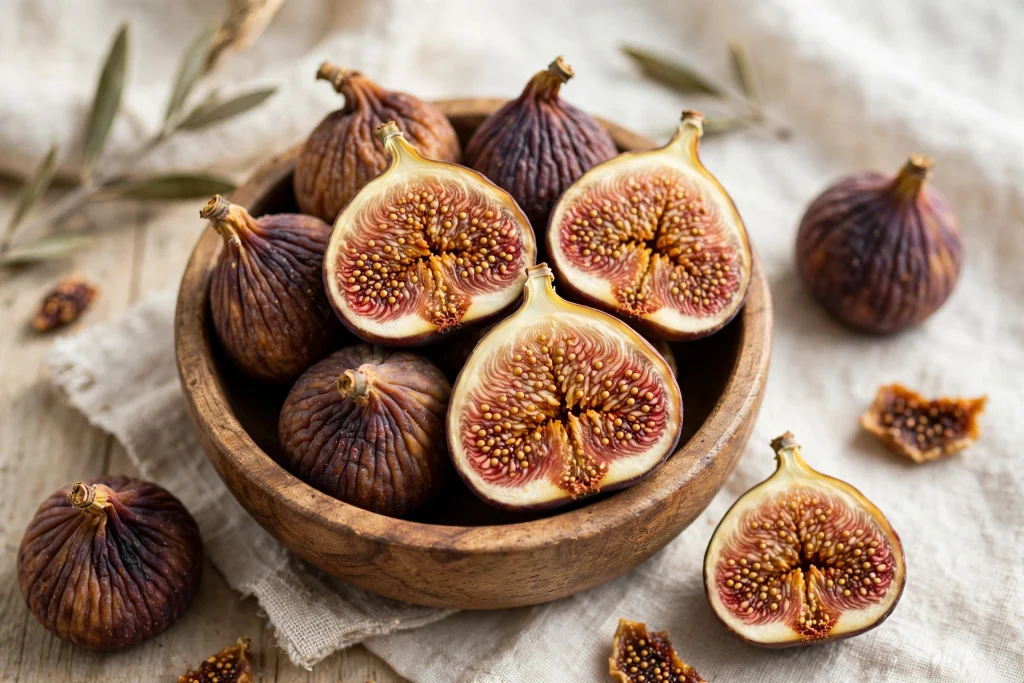
5. Dried Figs
Importance During Pregnancy
Dried figs are an excellent plant-based source of calcium, making them especially useful for pregnant women who don’t consume enough dairy products. They also contain fiber that supports digestion, and magnesium, which helps reduce the leg cramps commonly experienced during pregnancy.
Nutrition Facts (per 100g, approx.)
- Calories: 249 kcal
- Fiber: 9.8 g
- Calcium: 162 mg
- Magnesium: 68 mg
- Potassium: 680 mg
Recommended Amount
3 to 4 figs per day (about 30-40g).
General Tips for Eating Dried Fruits During Pregnancy
- Moderation is key: Dried fruits are concentrated in natural sugars and calories compared to fresh fruit, so it’s best not to exceed a small handful (30-40g) of one type or a mix per day.
- Choose natural varieties: Opt for dried fruits without added sugar, oils, or sulfur-based preservatives whenever possible.
- Monitor blood sugar: For women with gestational diabetes, it’s important to consult a doctor or dietitian to determine the appropriate amount.
- Stay well hydrated: The high fiber content in these fruits requires adequate water intake to avoid bloating or, paradoxically, worsened constipation.
- Vary the types: Rather than relying on just one type, eating a mix of dates, apricots, and figs provides a broader range of vitamins and minerals.
Note: This information is for general educational purposes. Always consult your doctor or a registered dietitian to determine the appropriate types and amounts based on your individual health needs during pregnancy.