Yogurt is one of the most versatile foods for people managing diabetes — but not all yogurt is created equal. Many flavored, store-bought varieties are packed with added sugar, which can cause rapid blood sugar spikes. This fresh yogurt for diabetics recipe uses plain, unsweetened yogurt as a base and builds in natural flavor, fiber, and protein without the sugar overload.
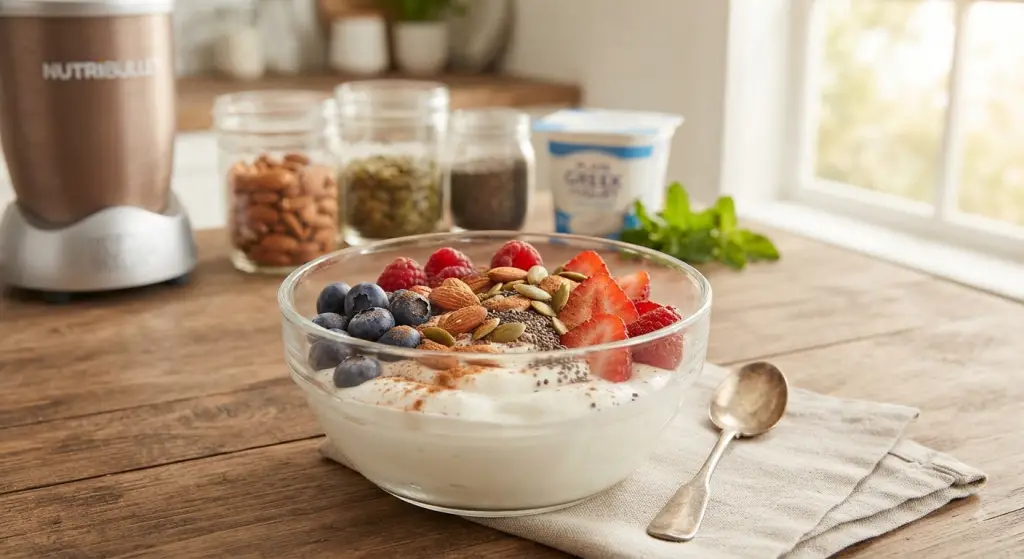
Ready in just 5 minutes with no cooking required, this recipe is perfect for breakfast, a midday snack, or even a light dessert that keeps blood glucose levels steady rather than spiking them.
Why This Yogurt Recipe Is Diabetic-Friendly
- Plain, unsweetened yogurt base: Avoiding flavored yogurts eliminates hidden added sugars, which can range from 15–20 grams per cup in many commercial brands.
- High protein content: Greek yogurt and regular plain yogurt are naturally high in protein, which slows digestion and helps prevent blood sugar spikes.
- Low-glycemic fruit: Berries add natural sweetness and fiber without significantly raising blood sugar the way tropical fruits or dried fruit can.
- Healthy fats and crunch: Nuts and seeds add fat and texture, further slowing the absorption of any natural sugars present.
- Fiber boost: Chia seeds, flaxseed, and nuts add fiber that supports digestion and helps regulate post-meal glucose levels.
This makes it an excellent choice for people with type 1 diabetes, type 2 diabetes, prediabetes, or anyone following a low-glycemic or high-protein diet.
Recipe Overview
| Prep Time | 5 minutes |
| Cook Time | 0 minutes (no-cook) |
| Total Time | 5 minutes |
| Servings | 2 |
| Calories | ~170 kcal per serving |
| Carbohydrates | ~13g per serving |
| Net Carbs | ~8g per serving |
| Fiber | 5g per serving |
| Protein | 16g per serving |
| Fat | 7g per serving |
| Glycemic Index | Low |
| Diet Type | Diabetic-friendly, low-GI, high-protein |
Nutrition values are estimates and will vary based on specific brands and toppings used.
Ingredients
This recipe makes 2 servings using a classic Greek yogurt, berry, and nut combination — one of the most reliable low-glycemic yogurt bowls for stable blood sugar.
- 1 1/2 cups plain, unsweetened Greek yogurt (full-fat or 2%, not fat-free flavored)
- 1/2 cup fresh or frozen mixed berries (blueberries, strawberries, or raspberries)
- 2 tablespoons chopped walnuts or almonds
- 1 tablespoon chia seeds or ground flaxseed
- 1/4 teaspoon ground cinnamon
- 1/2 teaspoon pure vanilla extract (unsweetened)
- A few drops of liquid stevia or monk fruit sweetener (optional, to taste)
- 1 teaspoon unsweetened shredded coconut (optional)
Ingredient Swaps for Blood Sugar Control
- Yogurt base: Plain regular yogurt, unsweetened coconut yogurt, or unsweetened skyr all work well as substitutes for Greek yogurt.
- Berries: Frozen berries work just as well as fresh; avoid canned fruit or fruit packed in syrup, which contains added sugar.
- Nuts: Swap walnuts or almonds for pecans, pistachios, or sunflower seeds for a nut-free option.
- Sweetener: Skip the stevia entirely if the berries provide enough natural sweetness for your taste.
- Extra protein: Stir in a scoop of unflavored protein powder for an even higher protein content.
Step-by-Step Instructions
- Add the yogurt to a bowl. Spoon the plain Greek yogurt into two serving bowls or glasses, dividing it evenly.
- Mix in the flavorings. Stir the vanilla extract and ground cinnamon directly into the yogurt until fully combined. This step adds flavor without needing added sugar.
- Add the berries. Top each bowl with the fresh or frozen mixed berries, spreading them evenly over the yogurt.
- Add the crunch. Sprinkle the chopped walnuts or almonds and chia seeds or flaxseed over the top of each bowl.
- Sweeten if needed. If you prefer a sweeter taste, add a few drops of stevia or monk fruit sweetener and gently stir it into the top layer of yogurt.
- Finish and serve. Sprinkle with unsweetened shredded coconut if using, and serve immediately while the berries and nuts are fresh and crunchy.
Tips for Keeping This Yogurt Blood-Sugar Friendly
- Always choose plain, unsweetened yogurt. Flavored yogurts, even ones labeled “light” or “low-fat,” often contain more added sugar than a candy bar per serving.
- Pair with protein and fat. The combination of yogurt’s protein with nuts and seeds’ healthy fats is what keeps this snack from spiking blood sugar.
- Mind your portion size. Stick to about 3/4 cup of yogurt per serving rather than eating directly from a large container.
- Read fruit labels carefully. If using frozen fruit, check that there’s no added sugar or syrup in the ingredient list.
- Check your personal response. Everyone’s blood sugar reacts differently to dairy and fruit combinations, so testing your glucose after a new recipe can help you understand your own patterns.
Delicious Variations to Try
- Savory Yogurt Bowl: Skip the fruit and sweetener, and instead top plain Greek yogurt with cucumber, cherry tomatoes, olive oil, and a pinch of za’atar or dried herbs.
- Peanut Butter Yogurt Bowl: Stir in a tablespoon of natural peanut butter and top with a few dark chocolate chips (85% cacao or higher) for a dessert-like treat.
- Apple Cinnamon Yogurt: Top with diced green apple, a sprinkle of cinnamon, and chopped pecans for a fall-inspired flavor with fiber-rich fruit.
- Tropical Yogurt Bowl: Use a small amount of diced kiwi and unsweetened shredded coconut for natural sweetness with a lower glycemic impact than tropical fruits like mango or pineapple.
Frequently Asked Questions
Is yogurt good for diabetics? Yes, plain, unsweetened yogurt — especially Greek yogurt — is an excellent choice for diabetics because it’s high in protein and low in carbohydrates compared to flavored varieties.
What is the best yogurt for diabetics? Plain Greek yogurt or plain regular yogurt with no added sugar is best. Look for options with at least 10 grams of protein per serving and minimal carbohydrates.
How many carbs are in this diabetic yogurt recipe? Each serving has approximately 13 grams of total carbohydrates and 8 grams of net carbs, though this will vary depending on the specific yogurt brand and toppings used.
Can I make this yogurt recipe ahead of time? The yogurt and toppings are best combined right before eating to keep the nuts and seeds crunchy, but you can pre-portion the berries, nuts, and seeds into small containers for quick assembly throughout the week.
Final Thoughts
Fresh yogurt for diabetics shows that a satisfying, protein-packed snack doesn’t have to come from a sugar-loaded, flavored cup. By starting with plain, unsweetened yogurt and building in natural flavor through berries, cinnamon, nuts, and seeds, you get a quick recipe that supports stable blood sugar levels while still feeling like a treat. Try the variations above to keep your yogurt routine varied and enjoyable while staying aligned with your diabetes management goals.
This article is for informational purposes only and is not a substitute for professional medical advice. Always consult your doctor or registered dietitian before making significant changes to your diabetes management plan.