There’s a reason peanut butter pie shows up on so many dessert menus — it’s rich, creamy, and satisfying in a way few other desserts manage. This Keto Peanut Butter No-Bake Pie captures all of that with none of the sugar or grain-based crust that usually comes with it. Built on a grain-free almond flour crust and filled with a whipped, sugar-free peanut butter cream, this pie sets up in the refrigerator rather than the oven, making it an easy make-ahead dessert for any occasion. It’s rich enough to satisfy a serious peanut butter craving while staying friendly to blood sugar, one slice at a time.
Why It’s Good for Diabetics
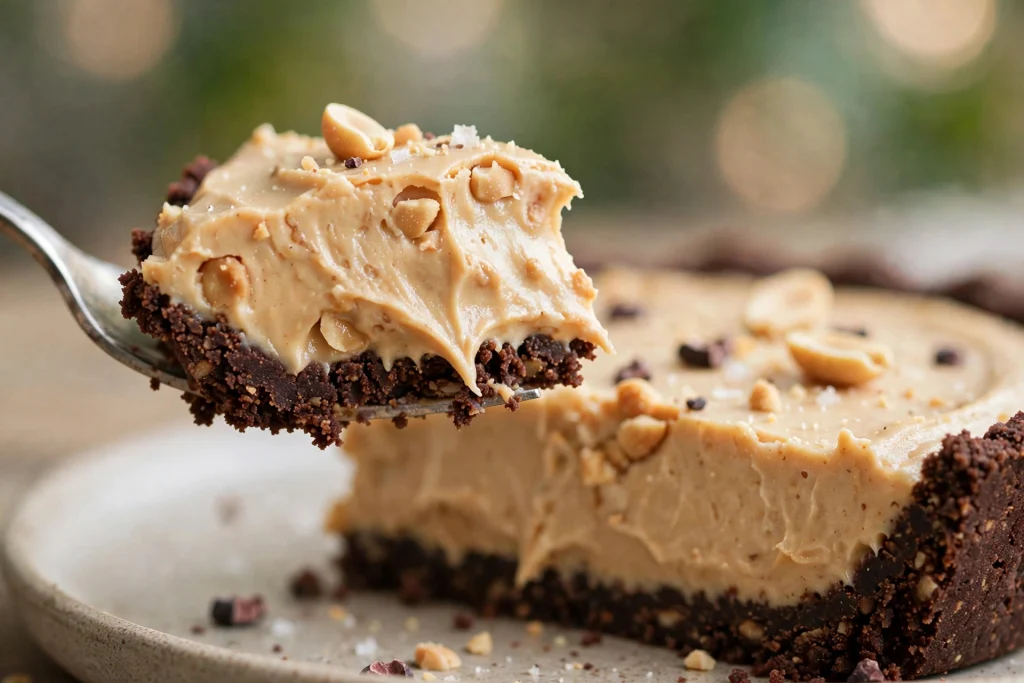
The biggest change from a traditional peanut butter pie is the complete removal of added sugar, both in the crust and the filling. A classic version typically layers a sugar-and-graham-cracker crust with a cream cheese and powdered sugar filling — a combination that delivers a fast, significant hit of refined carbohydrates. This recipe replaces the graham cracker crust with almond flour and butter, and swaps powdered sugar for a powdered sugar-free sweetener like erythritol or allulose, both of which have a glycemic index near zero.
Peanut butter, the star of the filling, is naturally rich in protein and monounsaturated and polyunsaturated fats. That combination slows gastric emptying and the rate at which any small amount of carbohydrate in the dessert is absorbed, helping to prevent the sharp blood sugar spike associated with sugar-heavy desserts. Cream cheese and heavy whipping cream, used to give the filling its light, mousse-like texture, contribute additional fat and a small amount of protein, both of which support that same slow, steady digestive process.
Almond flour, used in place of wheat-based graham crackers for the crust, is low in carbohydrates and high in fiber and healthy fat. Fiber slows digestion and has minimal direct impact on blood glucose, which is why almond flour crusts are a common substitution in low-carb and diabetic-friendly baking. Altogether, this pie relies on protein, fat, and fiber to create a dessert that digests slowly, rather than the fast-burning refined carbohydrates found in a traditional version.
Ingredients & Substitutes
For the Crust
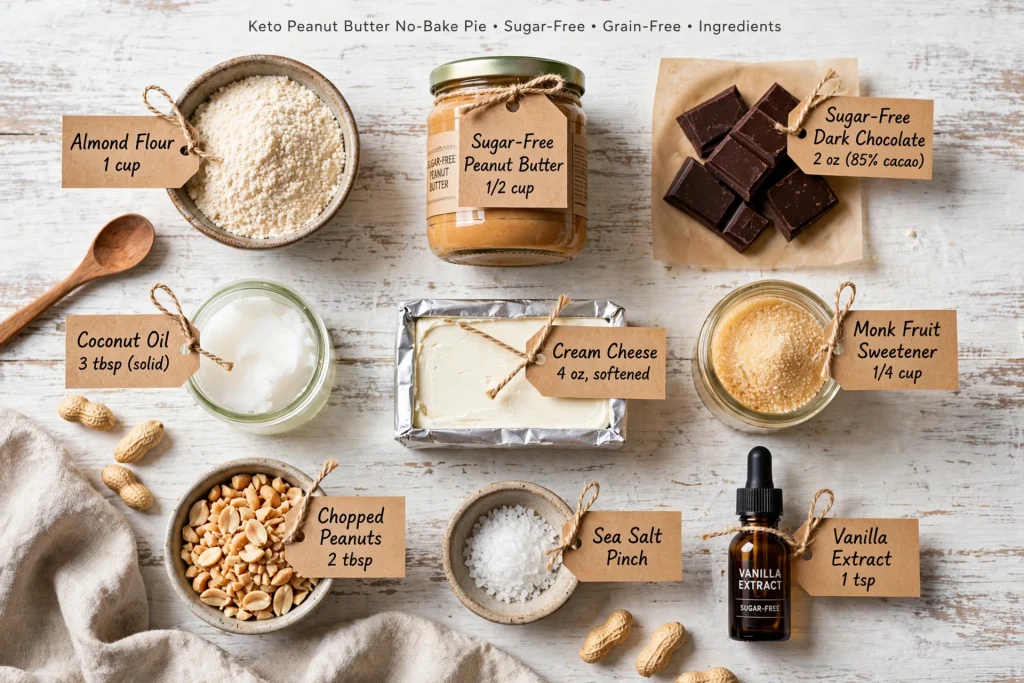
- 1 ½ cups almond flour — finely ground blanched almond flour works best for a smooth, sliceable crust.
- ¼ cup melted butter — coconut oil can be substituted for a dairy-free crust.
- 2 tbsp granulated erythritol or allulose — adds a touch of sweetness to the crust itself.
- ¼ tsp salt — balances the sweetness and enhances the nutty flavor of the almond flour.
For the Filling
- 1 cup natural peanut butter (no added sugar) — almond butter can be substituted for a slightly different but still creamy result.
- 8 oz cream cheese, softened — full-fat cream cheese gives the best texture; reduced-fat can be used but will yield a slightly softer filling.
- 1 cup heavy whipping cream — whipped separately and folded in for a light, mousse-like texture.
- ½ cup powdered erythritol or allulose — powdered (not granulated) sweetener dissolves smoothly into the filling without graininess.
- 1 tsp vanilla extract — rounds out the peanut butter flavor.
- Pinch of salt — enhances the overall flavor balance.
- Optional topping: a drizzle of sugar-free chocolate sauce or a sprinkle of chopped peanuts and sugar-free chocolate chips.
Step-by-Step Instructions
- Make the crust. Preheat the oven to 350°F (175°C). In a bowl, mix the almond flour, melted butter, erythritol, and salt until the mixture resembles wet sand. Press firmly and evenly into the bottom and up the sides of a 9-inch pie dish.
- Bake the crust. Bake for 8–10 minutes, until lightly golden. Remove from the oven and let it cool completely — this step is important, since a warm crust will melt the filling once it’s added.
- Beat the peanut butter mixture. In a large mixing bowl, beat the softened cream cheese and peanut butter together until smooth and fully combined. Add the powdered erythritol, vanilla extract, and salt, and beat again until light and fluffy.
- Whip the cream. In a separate bowl, whip the heavy cream until stiff peaks form. Take care not to overwhip, as this can cause the cream to become grainy.
- Fold together. Gently fold the whipped cream into the peanut butter mixture in two or three additions, folding just until combined to keep the mixture light and airy.
- Fill the crust. Spread the peanut butter filling evenly into the cooled crust, smoothing the top with a spatula.
- Chill. Refrigerate the pie for at least 4 hours, or ideally overnight, to allow it to firm up and set properly before slicing.
- Add toppings and serve. Just before serving, drizzle with sugar-free chocolate sauce or sprinkle with chopped peanuts and sugar-free chocolate chips, if desired. This recipe makes about 10 slices.
Nutritional Facts (per slice, ~10 slices)
Calories: 260 | Net Carbs: 4g | Fiber: 2g | Sugar: 1g | Fat: 24g | Protein: 7g
Baker’s Tips
- Cool the crust fully: Adding filling to a warm crust is the most common cause of a runny, hard-to-slice pie — let it cool completely, even in the refrigerator for 10 minutes, before filling.
- Use powdered sweetener in the filling: Granulated sweetener can leave a gritty texture in a no-bake filling; powdered versions dissolve much more smoothly.
- Whip cream to stiff peaks, not soft: Stiff peaks give the filling enough structure to hold its shape once sliced.
- Storage: Keep the pie covered in the refrigerator for up to 5 days.
- Freezing: This pie freezes well for up to 1 month; thaw in the refrigerator overnight before serving for the best texture.
Frequently Asked Questions (FAQ)
Can I use crunchy peanut butter instead of smooth? Yes — crunchy peanut butter adds texture throughout the filling, though the pie will be less perfectly smooth when sliced.
Why is my filling too soft to hold its shape? This usually happens if the whipped cream wasn’t whipped to full stiff peaks, or if the pie hasn’t chilled long enough. A minimum of 4 hours, and ideally overnight, is important for a clean slice.
Can I make this pie nut-free? Substitute the almond flour crust with a crust made from sunflower seed flour, and use sunflower seed butter instead of peanut butter for a completely nut-free version.
Is this pie suitable for a ketogenic diet as well as diabetic-friendly eating? Yes — with about 4g net carbs and 24g of fat per slice, this pie fits well within most ketogenic meal plans in addition to being a lower-glycemic dessert option.
This recipe is for general informational purposes and isn’t a substitute for advice from a doctor or registered dietitian, especially if you’re managing diabetes or blood sugar levels.