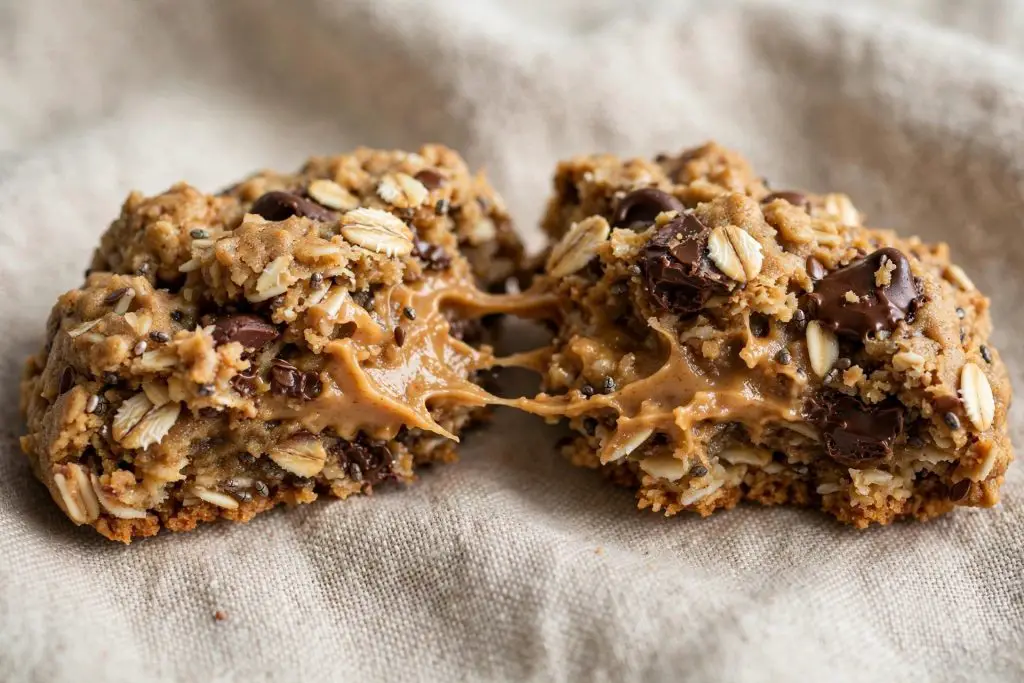
When you want a sweet fix without turning on the oven, no-bake cookies are the answer — and this version is built specifically with blood sugar in mind. Made from a base of natural peanut butter, rolled oats, and unsweetened cocoa, and sweetened with a sugar-free substitute instead of the traditional cup of white sugar, these No-Bake Diabetic Cookies come together on the stovetop in minutes and set in the refrigerator. They deliver the same rich, chewy, chocolate-peanut-butter flavor as the classic no-bake cookie recipe, minus the sugar crash that usually comes with it. This is an ideal option for hot days, quick desserts, or whenever you want a treat without heating up the kitchen.
Why It’s Good for Diabetics
Classic no-bake cookies rely on boiling white sugar and butter together to create a fudgy binding syrup — a combination that spikes blood glucose quickly due to the concentrated sugar content. This recipe swaps that syrup for a sugar-free sweetener cooked into the peanut butter and cocoa mixture, which provides the same sticky-sweet binding effect with a glycemic index near zero.
Natural peanut butter, the backbone of this recipe, is rich in protein and monounsaturated fat. Both nutrients slow gastric emptying and the rate at which sugar enters the bloodstream, which helps prevent the rapid glucose spikes associated with high-sugar, high-carb snacks. Because peanut butter also promotes satiety, a small cookie tends to feel more satisfying than an equivalent amount of a purely sugar-based treat.
Rolled oats add whole-grain fiber, specifically beta-glucan, a soluble fiber studied for its ability to slow carbohydrate absorption and support more stable post-meal blood sugar. Unlike quick oats or instant oatmeal, rolled oats retain more of their structure, which means they digest a bit more slowly. Unsweetened cocoa powder rounds out the flavor with rich chocolate taste and contains flavanols that some research associates with modest improvements in insulin sensitivity, all without contributing any sugar of its own.
Altogether, this cookie replaces fast-digesting sugar with a combination of protein, healthy fat, and fiber — a profile that generally produces a slower, gentler rise in blood glucose compared to a traditional no-bake cookie.
Ingredients & Substitutes
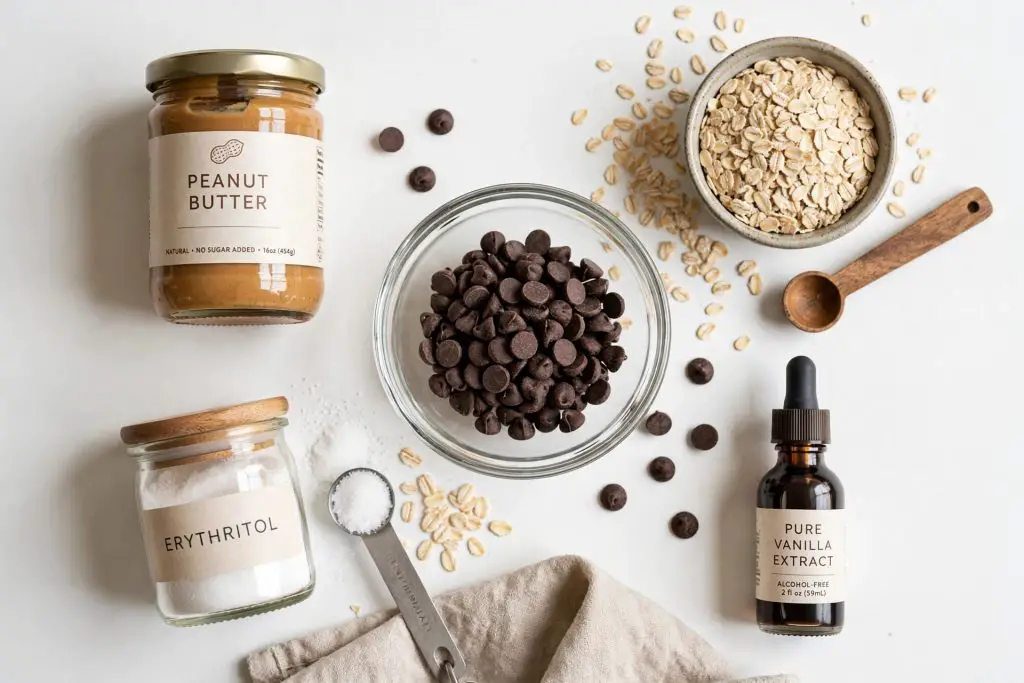
- ½ cup natural peanut butter (no added sugar) — almond butter or sunflower seed butter (for a nut-free version) can be substituted in equal amounts.
- ¼ cup butter or coconut oil — coconut oil gives a firmer set once chilled; butter gives a slightly softer, creamier texture.
- ⅓ cup granulated erythritol or allulose — allulose dissolves more smoothly and creates a softer texture; monk fruit blends also work.
- 2 tbsp unsweetened cocoa powder — Dutch-process cocoa gives a deeper flavor, but regular unsweetened cocoa works fine.
- ¼ cup unsweetened almond milk (or any milk of choice) — needed to help dissolve the sweetener and create the binding mixture.
- 1 tsp vanilla extract — enhances the chocolate-peanut butter flavor.
- Pinch of salt — balances sweetness and rounds out the flavor.
- 1 ½ cups rolled oats — old-fashioned oats hold their shape best; quick oats can be used but will make the cookies softer and less textured.
Step-by-Step Instructions
- Combine the wet base. In a medium saucepan over medium heat, combine the butter (or coconut oil), erythritol, cocoa powder, almond milk, and salt. Stir constantly as it heats.
- Bring to a gentle boil. Once the mixture is fully melted and combined, bring it to a gentle boil and let it bubble for exactly 1 minute, stirring the entire time. This step helps the sweetener dissolve fully and thickens the mixture slightly — do not walk away, as it can scorch quickly.
- Remove from heat and add peanut butter. Take the saucepan off the heat and stir in the peanut butter and vanilla extract until completely smooth and glossy.
- Fold in the oats. Add the rolled oats to the saucepan and stir until every oat is evenly coated in the chocolate-peanut butter mixture.
- Scoop the cookies. Working quickly while the mixture is still warm, use a spoon or small cookie scoop to drop rounded mounds onto a parchment-lined baking sheet or tray.
- Chill to set. Place the tray in the refrigerator for at least 30 minutes, until the cookies are firm to the touch. This recipe makes about 16 cookies.
Nutritional Facts (per cookie, ~16 cookies)
Calories: 100 | Net Carbs: 5g | Fiber: 2g | Sugar: 1g | Fat: 8g | Protein: 3g
Baker’s Tips
- Work quickly: The mixture firms up as it cools, so scoop the cookies onto the tray while it’s still warm and pliable.
- Storage: Keep finished cookies in an airtight container in the refrigerator for up to 1 week, since there’s no baking to help them hold together at room temperature for long.
- Freezing: These freeze very well — store in a freezer-safe container with parchment between layers for up to 3 months, and thaw in the refrigerator for about 20 minutes before eating.
- Texture control: For a firmer cookie, use coconut oil instead of butter and chill for a full hour; for a softer, fudgier bite, use butter and reduce the oat quantity slightly.
- Boiling time matters: Under-boiling the wet mixture can leave the cookies too soft to hold their shape, while over-boiling can make them dry and crumbly — stick close to the 1-minute mark.
Frequently Asked Questions (FAQ)
Why didn’t my cookies set properly? This is usually caused by not boiling the wet mixture long enough, which is needed to activate the sweetener and slightly reduce the liquid. Make sure it reaches a full boil and holds for the full minute.
Can I use a sugar-free sweetener other than erythritol? Yes — allulose is a great option since it behaves more like real sugar when heated and tends to produce a slightly softer, less gritty texture than erythritol.
Are these cookies gluten-free? Yes, as long as you use certified gluten-free rolled oats, since oats are frequently processed alongside wheat.
Can I add chocolate chips or nuts? Absolutely — fold in a tablespoon or two of sugar-free chocolate chips or chopped nuts along with the oats for extra texture, keeping portions modest to manage overall carb count.
This recipe is for general informational purposes and isn’t a substitute for advice from a doctor or registered dietitian, especially if you’re managing diabetes or blood sugar levels.