Introduction
Chia pudding has earned its place as one of the easiest make-ahead breakfasts, and this cinnamon berry version leans into that convenience while keeping blood sugar front of mind. Chia seeds themselves are something of a nutritional standout for anyone managing diabetes — they’re loaded with soluble fiber, they absorb liquid to form a naturally thick, pudding-like texture without any starch or added sugar, and they require no cooking at all. Mix everything the night before, and by morning you have a creamy, spoonable breakfast or snack that’s ready to go.
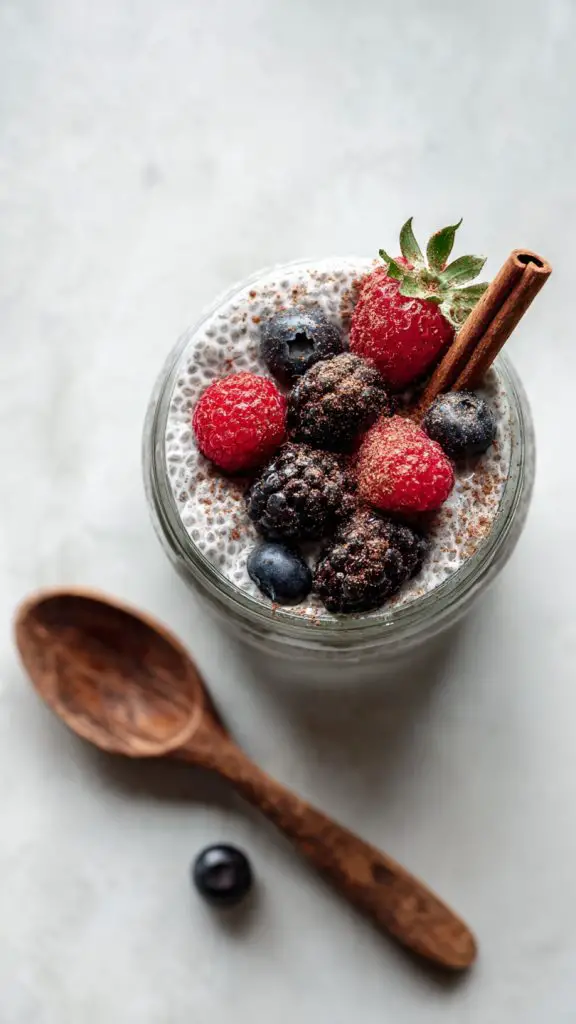
Cinnamon isn’t just there for flavor, either. It’s one of the more commonly studied spices in relation to blood sugar, often discussed for its potential to modestly improve insulin sensitivity, and it adds warmth and sweetness perception without needing extra sugar to get there. Paired with fresh or frozen berries — naturally lower in sugar than most other fruits — this pudding manages to feel like a genuine treat while staying well within a diabetes-friendly framework.
Ingredients
- ¼ cup chia seeds
- 1 cup unsweetened almond milk (or any unsweetened milk of choice)
- ½ tsp ground cinnamon
- ½ tsp vanilla extract
- 1–2 tsp granulated erythritol or monk fruit sweetener (optional, to taste)
- ½ cup fresh or frozen mixed berries (strawberries, blueberries, raspberries)
- A few extra berries and a light dusting of cinnamon, for topping
How to Make
- In a jar or bowl, whisk together the almond milk, cinnamon, vanilla extract, and sweetener (if using) until combined.
- Add the chia seeds and whisk again thoroughly — this initial mixing matters, since chia seeds tend to clump together if the liquid isn’t stirred well right away.
- Let the mixture sit for 5 minutes, then whisk once more to break up any clumps that have started to form.
- Cover and refrigerate for at least 4 hours, though overnight is ideal for the fullest, creamiest texture.
- Once set, stir the pudding well; it should be thick and spoonable, similar to a soft tapioca pudding. If it’s thicker than you’d like, stir in a splash more milk.
- Fold in half of the berries directly into the pudding, gently mashing them slightly so their juice swirls through.
- Divide into serving glasses or bowls, and top with the remaining berries and a light dusting of cinnamon just before serving.
Why Is This a Diabetic-Friendly Recipe?
Chia seeds are exceptionally high in soluble fiber, which absorbs water and forms a gel-like substance in the digestive tract. This slows the rate at which sugars from food are absorbed into the bloodstream, helping to smooth out the blood sugar response to a meal rather than allowing a fast spike. Unlike traditional pudding recipes that rely on cornstarch and sugar to achieve their texture, this one gets its thickness entirely from the chia seeds themselves, meaning there’s no refined starch working against the fiber’s benefits.
Berries are naturally lower in sugar and higher in fiber than most other fruits, and they bring antioxidants along with their natural sweetness, so a small amount goes a long way in terms of flavor. Cinnamon rounds things out both in taste and in the broader picture — it enhances the perception of sweetness, which means less added sweetener is needed overall, and some research suggests it may play a small supportive role in insulin sensitivity, though it shouldn’t be relied on as a treatment on its own.
Nutrition (per serving, makes 2 servings)
- Calories: ~180
- Net Carbs: ~9g
- Protein: ~6g
- Fat: ~10g
- Fiber: ~10g
How to Store
This pudding is genuinely built for storage, which is part of what makes it such a convenient option. Keep it in an airtight container or individual jars in the refrigerator for up to 5 days, making it easy to prep a batch at the start of the week and portion it out as needed. If the pudding thickens further over time, which is normal as the chia seeds continue to absorb liquid, simply stir in a small splash of milk to loosen it back up before eating. This recipe is not recommended for freezing, as the texture of chia pudding tends to become watery and separated once thawed, losing the smooth, creamy consistency that makes it enjoyable in the first place.