Introduction
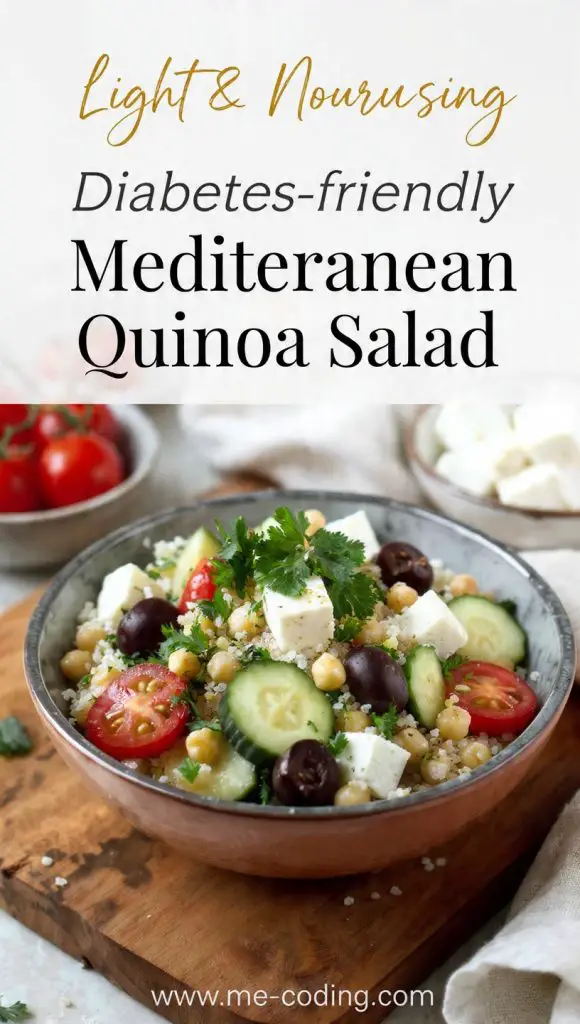
This Mediterranean quinoa salad is fresh, colorful, and built around ingredients that naturally support steady blood sugar — quinoa instead of refined grains, plenty of vegetables, healthy fats from olive oil and feta, and a bright lemon dressing that ties everything together. It’s a salad that works equally well as a light lunch on its own or as a side dish alongside grilled chicken or fish, and it holds up well over a few days, which makes it a genuinely practical option for meal prep.
Quinoa is technically a seed rather than a grain, but it’s used the same way, and it brings something most refined grains can’t: a complete protein profile along with fiber, both of which slow digestion and help prevent the sharp blood sugar spikes that a starchier, less balanced salad might cause. Combined with the classic Mediterranean staples of cucumber, tomato, olives, and feta, this salad delivers a lot of flavor and texture without leaning on anything that works against blood sugar control.
Ingredients
- 1 cup quinoa, rinsed
- 2 cups water or low-sodium vegetable broth
- 1 cucumber, diced
- 1 cup cherry tomatoes, halved
- ½ red onion, finely chopped
- ½ cup Kalamata olives, pitted and halved
- ½ cup crumbled feta cheese
- ¼ cup fresh parsley, chopped
- 2 tbsp fresh mint, chopped (optional)
- 3 tbsp extra virgin olive oil
- 2 tbsp lemon juice
- 1 garlic clove, minced
- ½ tsp dried oregano
- Salt and pepper, to taste
How to Make
- In a saucepan, combine the rinsed quinoa with water or broth. Bring to a boil, then reduce heat, cover, and simmer for 15 minutes, until the liquid is absorbed and the quinoa is tender.
- Remove from heat and let it sit covered for 5 minutes, then fluff with a fork and let it cool to room temperature.
- While the quinoa cools, prepare the vegetables: dice the cucumber, halve the tomatoes and olives, and chop the red onion, parsley, and mint.
- In a small bowl, whisk together the olive oil, lemon juice, garlic, oregano, salt, and pepper to make the dressing.
- In a large bowl, combine the cooled quinoa, cucumber, tomatoes, red onion, olives, and herbs.
- Pour the dressing over the salad and toss well to coat everything evenly.
- Fold in the crumbled feta last, so it doesn’t break down too much during mixing.
- Taste and adjust the seasoning, then serve immediately or refrigerate until ready to eat.
Why Is This a Diabetes-Friendly Recipe?
Quinoa has a lower glycemic index than white rice or couscous, and its combination of fiber and complete plant-based protein slows carbohydrate digestion, helping to prevent rapid blood sugar spikes after eating. The vegetables in this salad add volume, fiber, and micronutrients without contributing significant carbohydrates, while the olive oil provides monounsaturated fat, a type of fat that has been associated with improved insulin sensitivity when used in place of saturated fats. Feta and olives add flavor and a small amount of healthy fat as well, meaning the salad doesn’t need a sugar-laden dressing to feel satisfying — the lemon and herbs do that work instead, entirely sugar-free.
Nutrition (per serving, makes 4 servings)
- Calories: ~290
- Net Carbs: ~26g
- Protein: ~9g
- Fat: ~15g
- Fiber: ~5g
How to Store
Store the salad in an airtight container in the refrigerator for up to 4 days. Because it’s served cold or at room temperature rather than reheated, it’s an excellent make-ahead option for lunches throughout the week. If you’re prepping it in advance, consider keeping the dressing separate and tossing it in just before serving, as the cucumber and tomatoes can release extra moisture over time; this keeps the salad from becoming watery. This salad is not recommended for freezing, as the fresh vegetables and feta don’t hold their texture well after thawing.