Some recipes become favorites because they are impressive. Others earn their place because they are easy, forgiving and exactly what you want on a slow morning. Strawberry chocolate chip muffins belong in the second group. They are soft and fluffy, they have a golden dome, and every bite has a sweet piece of fruit and a little melted chocolate.
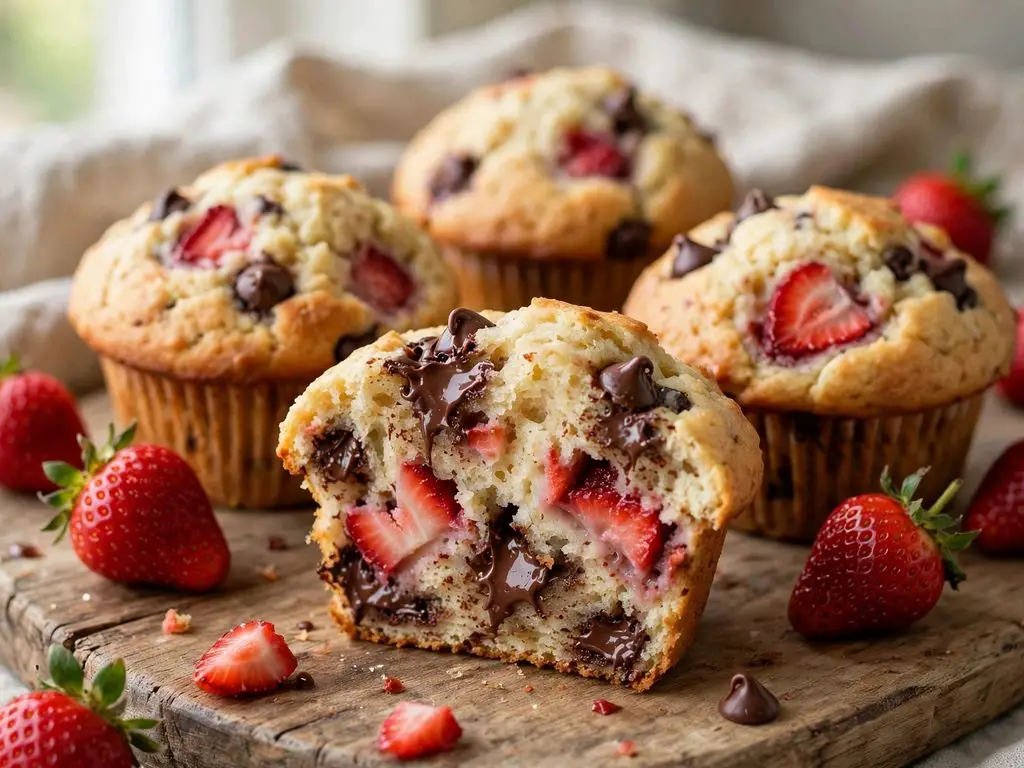
They are also a popular choice during pregnancy. Cravings for something sweet, fruity and chocolatey are common, and a muffin is a more reasonable answer than many alternatives, as long as it is fully baked and made with safe ingredients. You will see many online recipe cards labeled “healthy,” “pregnancy safe” or “pregnancy craving approved.” Some of those labels are fair, and some deserve a closer look.
This article explains how these muffins work, what makes them safe for pregnancy, how to bake them step by step, how to fix problems, and how to make them lighter if blood sugar is a concern. The recipe makes 12 muffins and takes about 40 minutes from start to finish.
The Recipe at a Glance
The batter is a classic quick-bread muffin mixture. You whisk the dry ingredients in one bowl, the wet ingredients in another, then fold them together with fresh strawberries and chocolate chips.
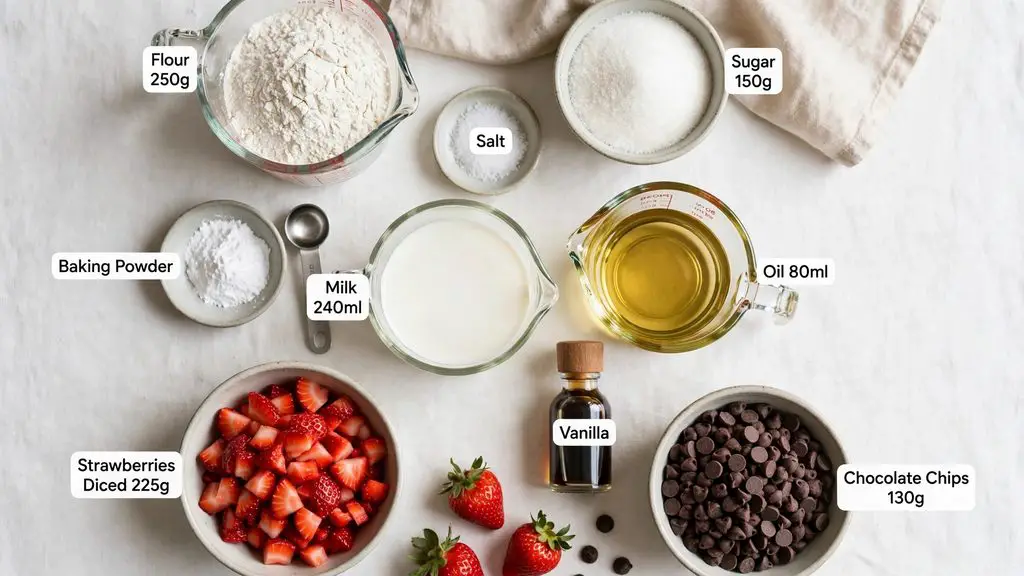
Dry: 2 cups (250 g) all-purpose flour, 3/4 cup (150 g) sugar, 2 teaspoons baking powder and 1/2 teaspoon salt.
Wet: 1 large egg, 1 cup (240 ml) pasteurized milk, 1/3 cup (80 ml) vegetable oil or melted butter, and 1 teaspoon vanilla extract.
Mix-ins: about 1 1/2 cups (225 g) diced fresh strawberries tossed in 1 tablespoon flour, plus 3/4 cup (130 g) chocolate chips.
Bake at 190 °C (375 °F) for 20 to 22 minutes. That is the whole recipe. The rest of this article is about doing it well.
Why This Recipe Works
Muffins rely on a simple chemical reaction. Baking powder contains an acid and a base. When it meets liquid, it releases tiny bubbles of carbon dioxide, and the heat of the oven makes those bubbles expand and set the structure. That is what gives a muffin its lift.
The second idea is the “muffin method.” Unlike a cake, where you cream butter and sugar for several minutes, a muffin batter is mixed as little as possible. When you stir flour with liquid, the proteins in the flour form gluten. A little gluten gives structure, but too much makes the muffins chewy and tough, with long tunnels inside. Stirring only until the streaks of flour disappear keeps them tender.
The third idea is fat. Oil gives muffins a moist crumb that stays soft for days, while butter adds flavor but firms up as it cools. Many bakery-style recipes use oil for that reason, and this one does too. You can use melted butter if you prefer the taste, and the texture will be slightly more cake-like.
Pregnancy Safety: What Matters Here
The phrase “safe for pregnancy” appears on almost every one of these recipe cards, so it helps to know what it depends on.
Cooked eggs. Raw or undercooked eggs can carry Salmonella. In a muffin, the egg is mixed into a batter and baked until the center is set, which makes it safe. The thing to avoid is eating or tasting the raw batter. Resist licking the spoon.
Pasteurized dairy. Use pasteurized milk, and pasteurized butter or yogurt if you use them. Ordinary supermarket milk is already pasteurized, but raw milk is not appropriate in pregnancy.
Washed fruit. Strawberries grow close to the ground and can carry soil bacteria or residues. Rinse them under running water and pat them dry before cutting. Soaking is not necessary.
Caffeine. Chocolate contains a small amount of caffeine. Each muffin here has roughly 5 to 10 mg, which is well below the common guideline of keeping total daily caffeine under about 200 mg. If you also drink coffee or tea, simply keep track of the total.
Storage. Muffins with fresh fruit can spoil faster than plain ones. If you do not eat them the same day, keep them in the fridge and eat them within a few days.
If your doctor or midwife has given you individual dietary advice, that advice takes priority.
Understanding the Ingredients
Because the ingredient list is short, each item has a clear job.
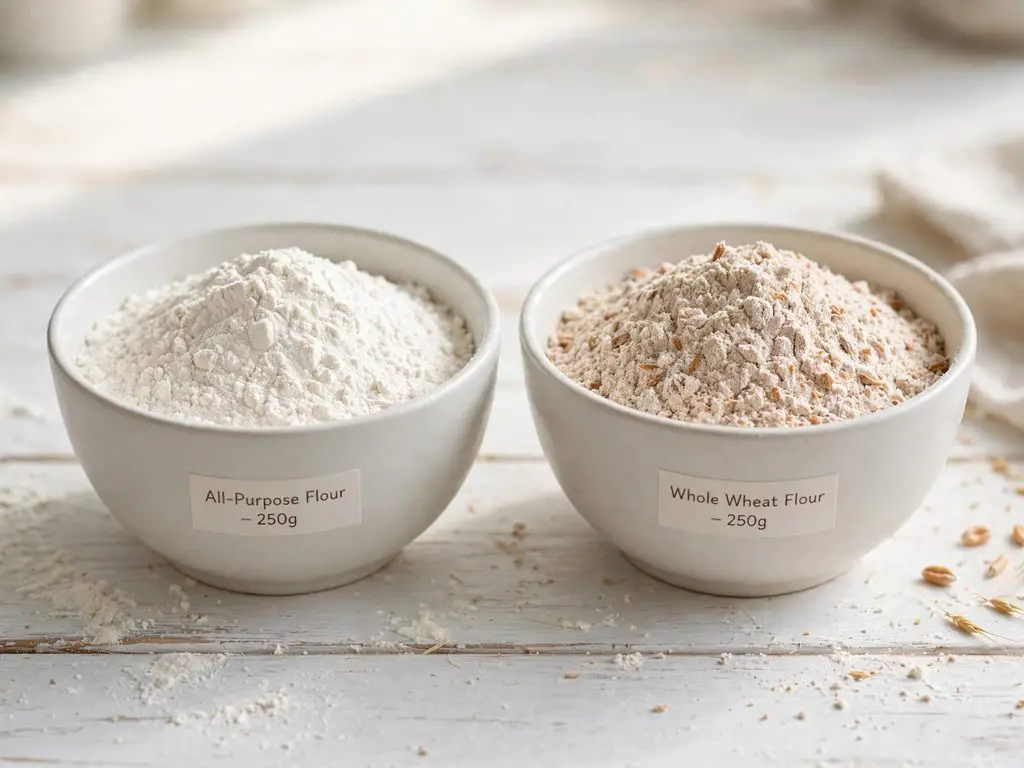
Flour. All-purpose flour gives enough structure without being too heavy. If you want a more nutritious muffin, you can replace half of it with whole wheat flour, which adds fiber but makes the crumb slightly denser.
Sugar. It sweetens, but it also holds moisture and helps the muffins brown. Reducing it too much will change the texture, so cut it gradually.
Baking powder. Check that it is fresh. Old baking powder is one of the most common causes of flat muffins. A quick test is to stir a spoonful into hot water; it should fizz strongly.
Egg and milk. The egg binds the batter, and the milk hydrates the flour. Bring the egg to room temperature so it blends in smoothly.
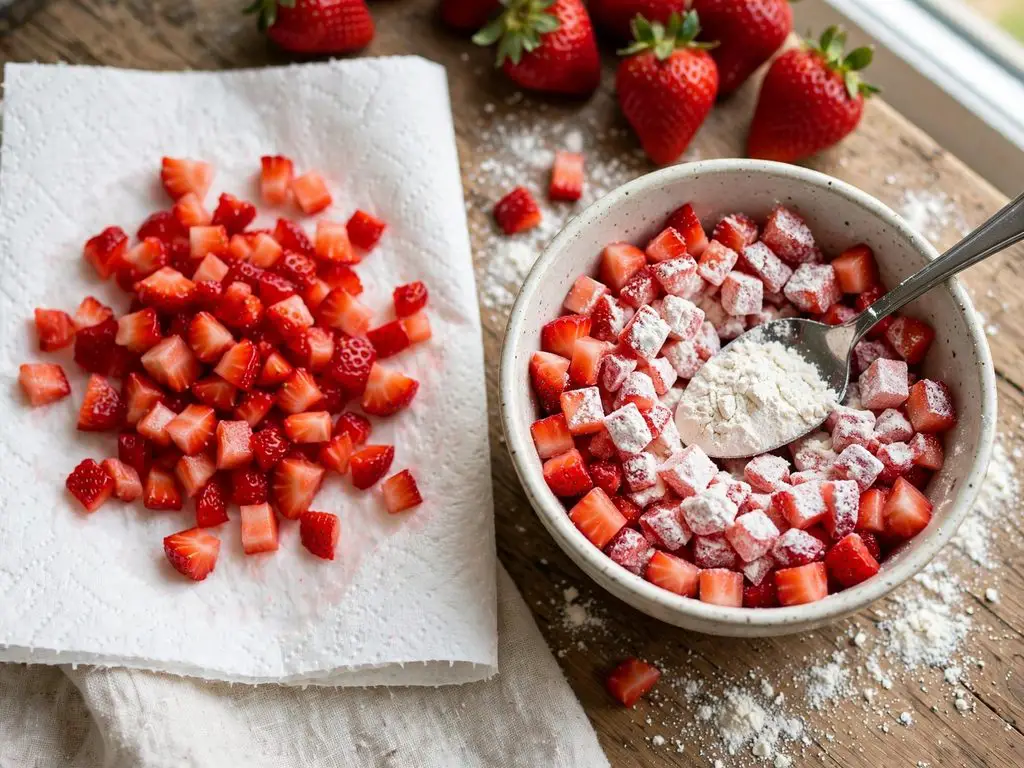
Strawberries. They are the star, but they are also the tricky part. Fresh strawberries release water as they bake, and that water can make the muffins soggy or turn the batter pink. Dice them small, pat them dry, and toss them in a spoonful of flour before folding them in.
Chocolate chips. Semi-sweet chips are the usual choice, but dark chocolate works well with the tartness of strawberries and has less sugar. Reserve a small handful to press onto the tops before baking so they look bakery-style.
Step by Step, With the Reasons
1. Heat the oven and line the tin. Set the oven to 190 °C (375 °F) and line a 12-cup muffin tin with paper liners.
2. Prepare the strawberries. Wash, dry and dice them into pieces about the size of a pea or small blueberry. Toss with a tablespoon of flour. The flour coats the surface so the fruit stays suspended in the batter instead of sinking to the bottom.
3. Whisk the dry ingredients. Whisking spreads the baking powder and salt evenly, which prevents bitter pockets and uneven rise.
4. Whisk the wet ingredients. Combine the egg, milk, oil and vanilla until smooth.
5. Fold, do not beat. Pour the wet mixture into the dry and fold with a spatula for about 10 to 12 strokes. A few small lumps are normal. Add the strawberries and chocolate chips and fold only two or three more times.
6. Fill generously. Fill each liner nearly to the top. Muffins that look slightly overfilled bake into the tall domes seen in bakery photos.
7. Bake. Bake for 20 to 22 minutes. They are done when the tops are golden and a toothpick comes out clean, apart from a smear of melted chocolate.
8. Cool. Let them rest in the pan for 5 minutes, then move them to a rack. Hot muffins continue to set as they cool, and steaming them in the pan can make the bottoms soggy.
For taller domes, try this bakery trick: bake the first 5 minutes at 220 °C (425 °F), then reduce the heat to 180 °C (350 °F) for the remaining 15 to 18 minutes. The initial blast of heat makes the batter spring upward before the crust forms.
Troubleshooting
The muffins are dense or rubbery. The batter was over-mixed. Next time, stop folding as soon as the dry flour disappears.
The muffins are flat. Check your baking powder and make sure the oven was fully preheated. Filling the liners higher also helps.
The fruit sank or the bottoms are wet. The strawberries were too large or too wet. Dice them smaller, dry them well and coat them in flour.
The muffins stuck to the liners. Cool them slightly longer before peeling, or use a light spray of oil on the liners.
The batter looks pink or gray. This happens when strawberry juice mixes with the batter. It is harmless and mostly cosmetic. Folding gently and keeping the fruit dry minimizes it.
The tops browned too fast. Your oven may run hot. Check with an oven thermometer, or lower the temperature by 10 degrees and bake a few minutes longer.
Are They Actually “Healthy”?
This is where honesty matters. Many of the recipe cards you see label these muffins “healthy,” but that depends on what you compare them with.
Based on standard ingredient values, I estimate each muffin has about 260 calories, 38 g of carbohydrate, 20 g of sugar, 11 g of fat, 4 g of protein and 1.5 g of fiber. The strawberries contribute vitamin C and a little fiber, but most of the muffin is refined flour, sugar and chocolate. These numbers are my own rough estimates and will vary with ingredients.
That makes them a pleasant treat, comparable to a standard bakery muffin but smaller and lower in fat than most large coffee-shop versions. They are not a nutrient-dense food. If your aim is a more nourishing snack, pair a muffin with milk, yogurt, or a handful of nuts to add protein and slow the sugar absorption.
Making Them Friendlier for Diabetes or Gestational Diabetes
With 38 g of carbohydrate per muffin, the standard recipe can raise blood sugar quickly, which matters for people with diabetes or gestational diabetes. The good news is that muffins respond well to adjustments.
- Swap part of the flour. Replace half of the all-purpose flour with whole wheat or oat flour, and add two tablespoons of ground flaxseed for extra fiber.
- Reduce the sugar. Try 1/3 cup instead of 3/4 cup, or use a baking-friendly sweetener following the package’s conversion.
- Upgrade the chocolate. Use chopped 85% dark chocolate and use less of it.
- Add protein. Replace a few tablespoons of the oil with plain Greek yogurt.
- Shrink the portion. Bake mini muffins, which cuts the carbohydrate per serving roughly in half.
- Time it well. Eat a muffin after a meal rather than alone, and check your blood glucose to learn how your body responds.
I am not a doctor or dietitian, and sweeteners and whole grains change the texture and browning, so expect some experimenting. Your healthcare team can advise how a recipe like this fits your plan.
Variations to Try
Once the base recipe feels comfortable, there are many easy directions. Swap the strawberries for blueberries for a classic berry chip muffin. Replace 1/4 cup of flour with unsweetened cocoa for a double-chocolate version. Use a mix of strawberries, raspberries and blueberries for a bright, tangy flavor. For an oat and flax “healthy” version, use 1 cup of flour, 1 cup of oats and 2 tablespoons of flaxseed. For a dessert-style version, drizzle cooled muffins with melted chocolate and top with a few fresh strawberry slices.
Storing and Serving
Muffins are best the day they are baked. Store them in an airtight container at room temperature for up to 2 days, or in the fridge for up to 4 days if you want to be careful with the fresh fruit. A paper towel placed in the container absorbs moisture and keeps the tops from turning sticky. For longer storage, freeze cooled muffins in a bag for up to 2 months. Thaw at room temperature, or warm for about 20 seconds in the microwave so the chocolate softens again.
Final Thoughts
Strawberry chocolate chip muffins are easy, adaptable and satisfying, which explains why so many versions circulate online. Made with a fully baked egg, pasteurized dairy and washed fruit, they are a reasonable treat during pregnancy. They are not a health food, and the “healthy” label on a recipe card should be read as “homemade and fairly sensible,” not “low in sugar.” Bake them with a light hand, keep the strawberries dry, and enjoy one warm with a glass of milk.