The spinach feta omelet is a fluffy, golden, protein-rich breakfast that takes about 15 minutes and uses only three main ingredients: eggs, fresh spinach and feta cheese. Olive oil, salt, pepper, a pinch of herbs and a splash of milk complete it. It is meat-free, easy to cook in one pan, and gentle on the stomach.
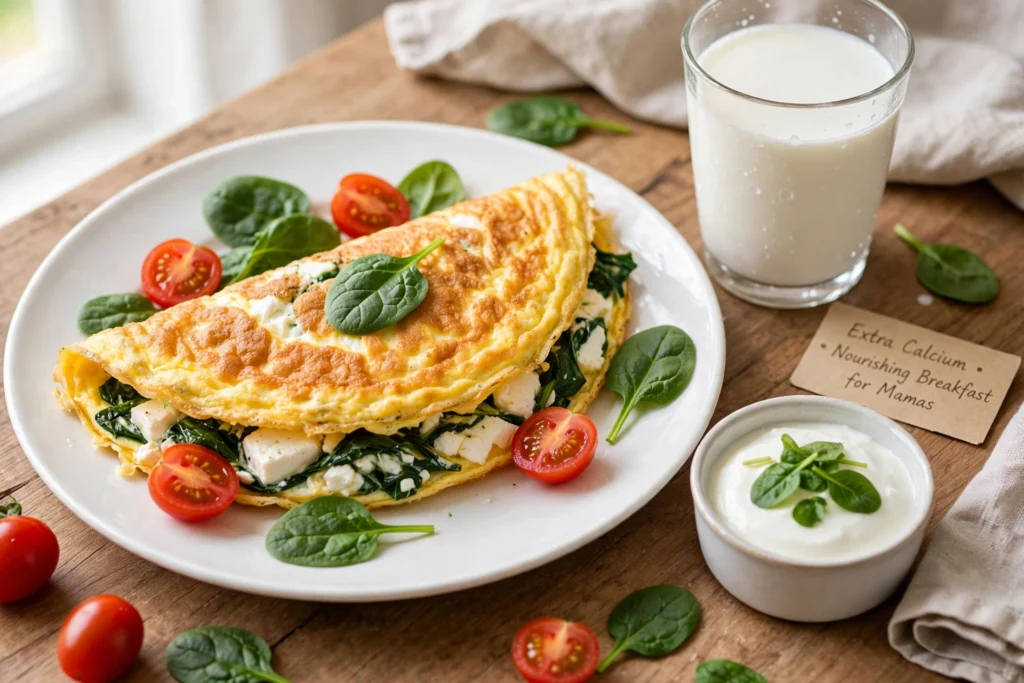
This recipe was designed with mamas in mind. During pregnancy and breastfeeding, the body needs more calcium, protein, iron and folate than usual. Eggs bring complete protein and choline, spinach brings iron, folate and vitamins, and feta adds calcium and a savory, salty flavor that makes a simple omelet feel special. Together they make a warm, nourishing meal that supports both mother and baby.
The omelet also fits a busy life. There is no oven, no special equipment and no long preparation. A single non-stick pan, a whisk or fork and a spatula are enough. Whether you are expecting, recovering after birth, or simply looking for a healthy breakfast, light lunch or quick dinner, this omelet delivers steady energy without feeling heavy.
In this document you will find the ingredient list with simple substitutions, a clear step-by-step method with timings and safety tips, an explanation of why the recipe is good for mamas, an approximate nutrition breakdown for one serving, and a QR code that takes you to more healthy pregnancy recipes.
Quick facts: prep 5 minutes · cook 8 to 10 minutes · serves 1 · no oven needed.
Ingredients
The recipe makes one generous omelet. Double the quantities for two people and cook in two batches for the fluffiest result.
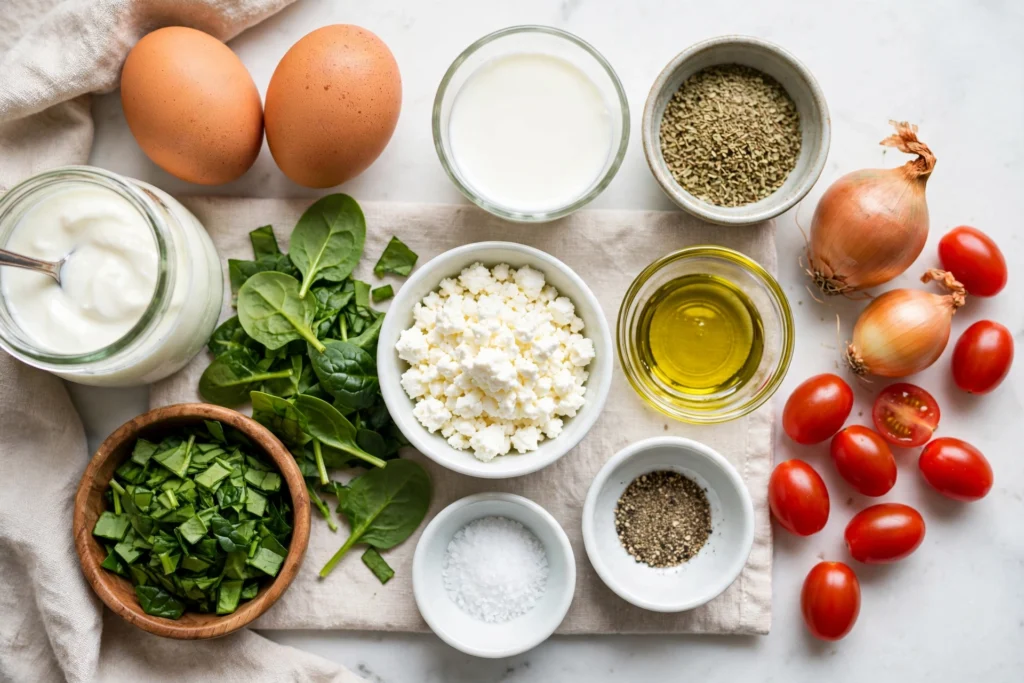
| Ingredient | Quantity | Role |
|---|---|---|
| Large eggs | 2 | Protein, choline and structure |
| Fresh spinach, finely chopped | 1/2 cup | Iron, folate and vitamins |
| Feta cheese, crumbled | 1/4 cup | Calcium and savory flavor |
| Olive oil | 1 tbsp | Healthy fats for cooking |
| Salt | 1/4 tsp | Seasoning |
| Black pepper | To taste | Seasoning |
| Milk | 1 splash (about 1 tbsp) | Extra fluffiness |
| Dried herbs (oregano or thyme) | 1 pinch, optional | Aroma |
| Small onion, finely diced | 1, optional | Sweetness and extra flavor |
To serve: a few cherry tomatoes, a handful of baby spinach leaves, and a glass of milk or a small cup of plain yogurt on the side for extra calcium.
Shopping and substitution tips
- Eggs: choose fresh, good-quality eggs and keep them refrigerated until use.
- Spinach: young baby spinach is tender, mild and cooks in about a minute. Wash it thoroughly, even if the bag says pre-washed.
- Feta: during pregnancy, choose feta made from pasteurized milk and check the label. If you cannot find it, pasteurized cottage cheese or ricotta works well.
- Oil: olive oil is ideal, but a small knob of butter also gives a rich flavor.
- Extras: diced bell pepper, mushrooms or a few cherry tomatoes can be added to the filling for more color and vitamins.
How to Make
Total time is about 15 minutes. The key is low, gentle heat: it keeps the eggs soft and fluffy and prevents browning too early.
- Whisk the eggs (1 minute). In a bowl, whisk the 2 eggs with 1/4 tsp salt, a pinch of black pepper and a splash of milk until the mixture is evenly yellow and slightly frothy.
- Prepare the filling (2 minutes). Wash and finely chop the fresh spinach. Crumble the feta into small pieces and set it aside. If using onion, dice it very finely.
- Sauté the spinach (2 minutes). Warm 1 tbsp olive oil in a non-stick pan over medium-low heat. If using onion, cook it for 1 to 2 minutes until soft. Add the spinach and stir until it is bright green and wilted. Remove the spinach from the pan or push it to the side.
- Pour in the eggs (3 minutes). Spread the spinach evenly across the pan, then pour in the egg mixture. Cook on low heat without stirring too much. Let the edges set, then gently lift them with a spatula so the liquid egg flows underneath.
- Add the feta and fold (2 minutes). When the top is mostly set but still slightly glossy, sprinkle the feta over one half. Fold the other half over the filling with the spatula.
- Cook through (1 to 2 minutes). Cook until the omelet is fully set and lightly golden. For pregnancy, make sure the eggs are cooked firm, with no runny parts.
- Serve warm. Slide the omelet onto a plate, garnish with cherry tomatoes and baby spinach, and enjoy immediately.
Tips for the best omelet
- Use a pan about 20 cm (8 inches) wide so the omelet is thick and easy to fold.
- A splash of milk makes the omelet airier. Do not add too much, or it will turn watery.
- Feta is already salty, so keep the added salt low, especially if you are watching your sodium.
- Do not overcook. Browning and dry edges mean the heat was too high.
- Squeeze extra water from washed spinach before chopping to avoid a soggy omelet.
Variations
- Creamy style: add a spoonful of plain yogurt or a little extra milk to the eggs.
- Veggie boost: add diced tomato, bell pepper or mushrooms with the spinach.
- Bite-size version: pour the mixture into a small baking dish, cook, and cut into squares for easy eating and meal prep.
Storage
Store leftovers in a covered container in the refrigerator for up to 1 day. Reheat gently until piping hot all the way through, and do not reheat more than once.
Why It Is Healthy for Mamas
This omelet covers several nutrients that matter most during pregnancy and after birth, in one quick and satisfying meal.
- Calcium for bones. Calcium builds the baby’s bones and teeth and protects the mother’s own bone density. Feta, and the milk or yogurt served on the side, supply a useful share of the daily need.
- Protein for growth and recovery. Eggs provide complete protein, which supports the baby’s growth, helps the body repair itself after birth, and keeps you full for longer.
- Iron against fatigue. Spinach contains iron, which helps make the extra blood needed in pregnancy. Pairing it with tomatoes, which are rich in vitamin C, helps the body absorb it better.
- Folate for development. Spinach is a good source of folate, a vitamin linked to healthy development of the baby’s brain and spine.
- Choline for the brain. Egg yolks are one of the best food sources of choline, which supports the baby’s brain development.
- Healthy fats and steady energy. Olive oil provides unsaturated fats, and the combination of protein and fat avoids the quick energy crash that sugary breakfasts can cause.
- Gentle and meat-free. The omelet is soft, mild and easy to digest, which many mamas appreciate when dealing with nausea or a sensitive stomach.
Safety notes for pregnancy
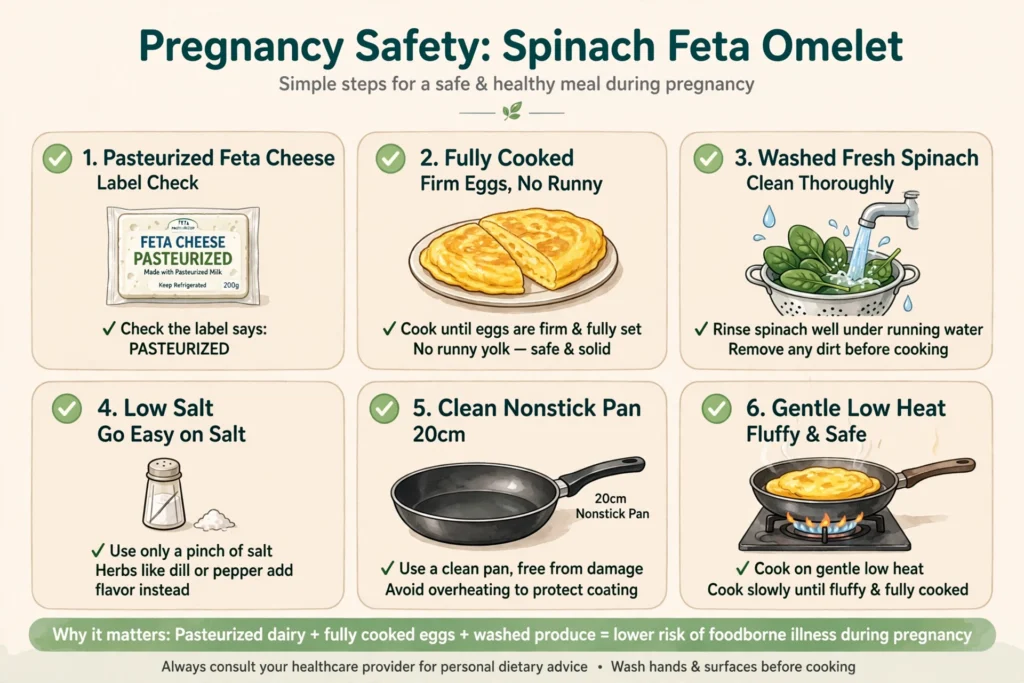
- Cook the eggs fully. Eggs should be firm, with no runny yolk or white, to reduce the risk of salmonella.
- Choose pasteurized feta. Soft cheeses made from raw milk can carry listeria. Pasteurized feta is generally considered safe, but always check the label.
- Wash spinach well. Rinse leaves under running water to remove soil and bacteria.
- Watch the salt. Feta is naturally salty, so go easy on added salt, particularly if you have been advised to limit sodium.
- Check with your provider. Needs vary from person to person. Follow the advice of your doctor, midwife or dietitian, especially if you have gestational diabetes, high blood pressure or food allergies.
This recipe is general nutrition information and not a substitute for medical advice.
Nutrition
One omelet (1 serving) provides roughly 370 calories and about 19 g of protein. The values below are approximate estimates from standard food data for the listed quantities, and they vary with the brand of feta, egg size and added salt.
| Nutrient | Per serving (approx.) |
|---|---|
| Calories | 370 kcal |
| Protein | 19 g |
| Total fat | 31 g |
| Carbohydrates | 3 g |
| Calcium | 270 mg |
| Iron | 2.5 mg |
| Folate | 75 mcg |
| Choline | 290 mg |
| Sodium | 1,000 to 1,100 mg |
Reading the numbers: the omelet gives about a quarter of the daily calcium target for most adults (around 1,000 mg) and a large part of the daily choline recommendation for pregnancy (around 450 mg). Sodium is on the higher side because of the feta and added salt, so reduce the salt if you need to. Adding a glass of milk or a small cup of plain yogurt raises the calcium to roughly half of the daily target, and a handful of cherry tomatoes adds vitamin C to help iron abs
Questions and Answers
Is feta cheese safe during pregnancy? Yes, when it is made from pasteurized milk. Check the label, and avoid feta made from raw milk because of the listeria risk.
Can I eat this omelet every day? One omelet a day is generally fine for most healthy pregnancies, but follow your doctor’s, midwife’s or dietitian’s advice, especially if you have gestational diabetes or high blood pressure.
How do I know the eggs are cooked enough? The omelet should be firm and set throughout, with no runny or glossy parts. Cook it a minute longer rather than risk undercooked eggs.
Can I replace feta with another cheese? Yes. Pasteurized cottage cheese, ricotta or mozzarella all work. Feta gives the most calcium and flavor per spoonful, but it is also the saltiest.
Can I use frozen spinach? Yes. Thaw it, squeeze out all the water, and cook it for a minute. Use about 1/4 cup, because frozen spinach is more concentrated.
How do I make the omelet fluffier? Add a splash of milk, whisk until slightly frothy, and cook on low to medium-low heat in a non-stick pan without stirring too much.
Can I store or reheat leftovers? Store in a covered container in the refrigerator for up to 1 day. Reheat gently until piping hot all the way through, and only once.
Is it good after birth and while breastfeeding? Yes. The protein, calcium, iron and choline help recovery and support milk production. Pair it with a glass of milk or yogurt for extra calcium.
Can I make it without onion or with extra vegetables? Yes. The onion is optional. Diced tomato, bell pepper or mushrooms are good additions and add vitamins and color.